How Many Isopods and Springtails Do You Need for a Bioactive Terrarium?
How many isopods and springtails to add to a bioactive terrarium, how long to let them settle before adding your animal, how to feed them, and how to tell if you have too few or too many.
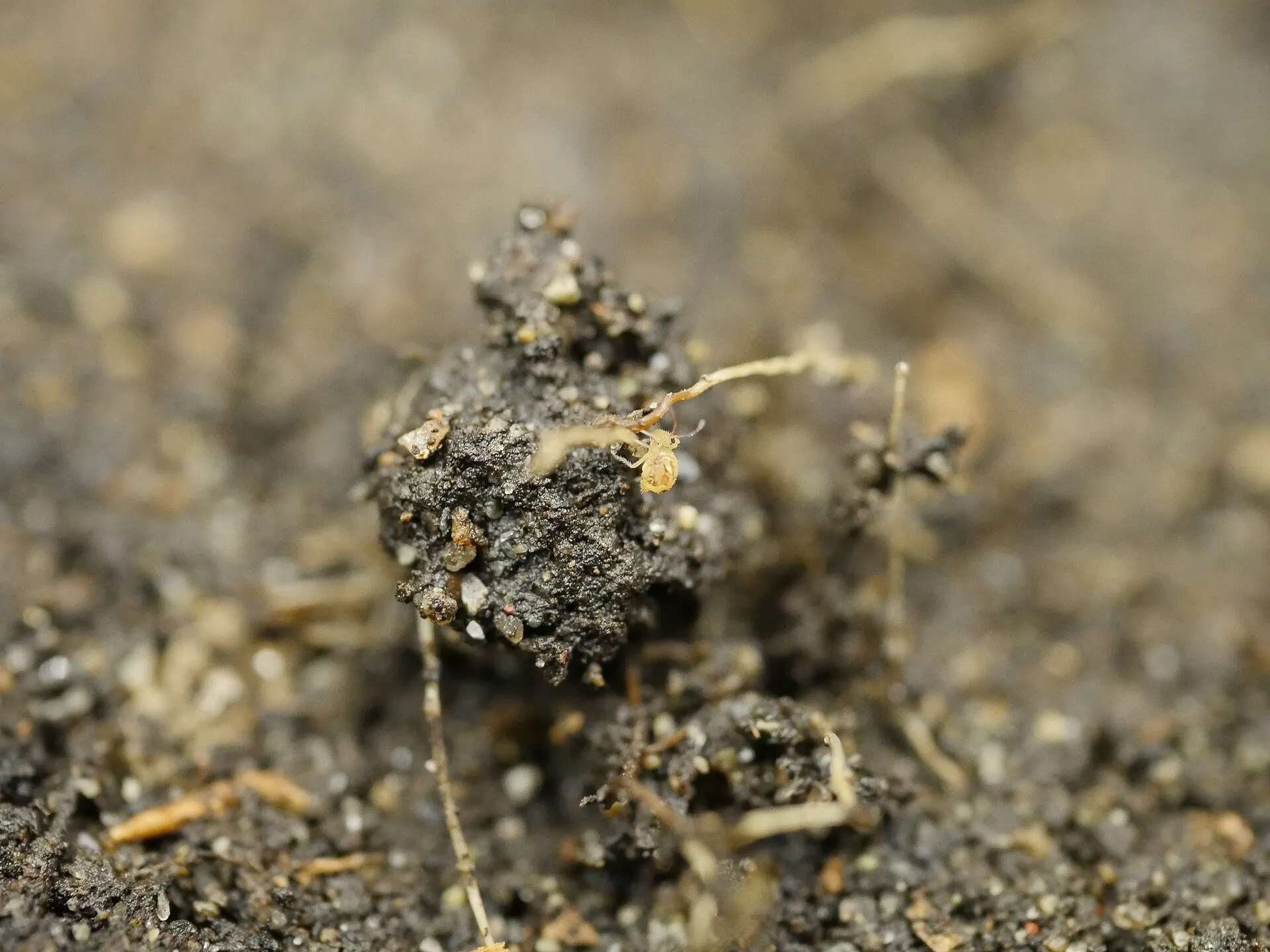 Photo: Lewis Fausak, CC BY-SA 4.0
In this guide
Short answer: there’s no exact formula, and you need fewer than you might think. For a small or medium vivarium (up to about 18 × 18 in), one springtail culture and one starter culture of 20–50 isopods is a common starting point. Both breed quickly. What matters more is giving them time: add the cleanup crew 2–5 weeks before your animal, feed them a little, keep plenty of leaf litter, and let the population build. In larger enclosures, add more cultures or wait longer.
Starting numbers from different sources
| Source | Isopods | Springtails |
|---|---|---|
| Josh’s Frogs | One 25+ dwarf white culture for up to about 18 × 18 in (29 gallons) | Sold as 8 oz or 32 oz cultures, not by count |
| Gensou | 30–50 isopods for a 45 × 45 × 45 cm tank | At least 500–1,000 (about one culture pot) |
| New England Herpetoculture | A few dozen to start a small vivarium; a few hundred or more for large ones |
The springtail numbers range from “a few dozen” to “1,000”, which shows how much room there is for error. Springtails are sold by culture size rather than counted; a typical culture contains hundreds.
For larger enclosures, Josh’s Frogs suggests either buying more cultures or letting the colony grow for about a month and then moving some to other areas.
Give them time before the animal goes in
| Source | Wait before adding the animal |
|---|---|
| ReptiFiles | Springtails can build a population “within a few short weeks” |
| Gensou | 2–4 weeks |
| New England Herpetoculture | 3–5 weeks for springtails |
| Rubber Ducky Isopods | Adding crew and animal together is fine for most hobbyists |
Gensou warns against adding the crew and frogs on the same day, because frogs can eat a starter population faster than it breeds. For animals that hunt the crew, the waiting period matters more.
Terrarium Tribe says isopods breed so fast that you’ll rarely need to buy another culture. A reviewer on Josh’s Frogs reported barely seeing dwarf whites at first, then finding them everywhere a few months later. That’s typical: a slow start, then rapid growth.
Choose species that fit the setup
The number matters less than choosing a species that survives your conditions:
- Tropical (dart frogs, crested geckos): springtails plus dwarf white or powder isopods. See dwarf white isopod care.
- Arid (bearded dragons, leopard geckos): hardier isopods with a damp retreat, and springtails only where there are humid hides. Swell Reptiles and ReptiFiles note that many tropical crew species won’t thrive in dry setups. See best isopods for leopard geckos and bioactive bearded dragon enclosure.
- Animals that eat the crew: The Bio Dude suggests dwarf isopods, which spend most of their time deep in the soil and are less likely to be eaten.
Feeding the cleanup crew
In a new enclosure there isn’t much waste yet, so the crew needs some help. Terrarium Tribe notes you may need to add food especially at the start.
- Leaf litter and rotting wood: always available. They’re the staple. See what do isopods eat.
- Extra food: The Bio Dude feeds small colonies about once a week and larger ones two or three times a week. Gensou suggests a pea-sized amount of fish food or cucumber weekly, removed after 48 hours.
- Calcium: a piece of cuttlebone for isopods.
- A springtail check: ReptiFiles notes that a slice of mushroom is usually eaten by springtails within a day.
Don’t overfeed: leftover food can grow mold or attract mites. See mold in a bioactive terrarium and grain mites in isopod cultures.
Signs you have too few
Rubber Ducky Isopods says most colonies that look like they’ve crashed haven’t: the isopods are hiding, and new ones may disappear for days. ReptiFiles says springtails are often invisible even when thriving. To check:
- Lift leaf litter, bark and the water dish.
- Look for springtails jumping when you disturb the surface.
- Watch whether droppings and leftover food disappear.
Real declines usually come from substrate that’s too dry, too wet or too poor, or from too little leaf litter. If mold and waste build up, add more crew or improve conditions.
Can you have too many?
Yes, though it’s less common. The Bio Dude warns that too many isopods can stress or even nibble on the animals, and ReptiFiles notes that a booming isopod population can outcompete springtails. The Bio Dude suggests luring extras with a slice of carrot or banana and moving them to a separate culture. Springtail booms usually mean there’s excess food or mold; cut back on feeding.
Do you need to add more later?
Sources disagree:
- Josh’s Frogs suggests adding springtails about once a month to keep numbers up in a dart frog vivarium, and keeping a separate culture for restocking.
- New England Herpetoculture says springtails in a well-established vivarium will likely never need to be added again.
A practical middle ground: keep a small culture going outside the enclosure (see how to culture springtails) and top up only if numbers clearly drop, especially in tanks with frogs or small lizards that hunt the crew. Josh’s Frogs notes that occasional snacking usually has little effect on an established isopod population.
For the roles of each group, see isopods vs springtails.
Frequently asked questions
How many springtails do I need for a terrarium?
One culture is usually enough for a small or medium vivarium. They breed quickly, so the exact number matters less than giving them a few weeks to settle.
How many dwarf white isopods do I need?
Josh’s Frogs says one culture of 25+ can seed an enclosure up to about 18 × 18 in. For bigger tanks, add more cultures or let them breed for a month first.
How long should a cleanup crew settle before adding animals?
Most sources suggest about 2–5 weeks. Some say adding everything together is fine, but a head start helps when the animal eats the crew.
Do I need both isopods and springtails?
Most keepers use both because they do different jobs, but a heavily planted tank without animals may need only springtails.
Sources
- Dwarf tropical white isopods, 25 count (Josh's Frogs)
- Microfauna in your bioactive dart frog vivarium (Josh's Frogs)
- Isopods in the bioactive enclosure (Josh's Frogs)
- Maintaining your vivarium (Josh's Frogs)
- Springtail culture care (New England Herpetoculture)
- I added the clean up crew to my bioactive. Now what? (ReptiFiles)
- What role does a clean up crew play in a bioactive terrarium? (The Bio Dude)
- Springtails vs. isopods (Rubber Ducky Isopods)
- Did my isopod colony crash? (Rubber Ducky Isopods)
- Bioactive vivarium clean-up crew guide (Gensou)
- Custodians: what does bioactive actually mean? (Swell Reptiles)
- Bioactive terrariums: how they work and how to build one (Terrarium Tribe)