Bioactive Bearded Dragon Enclosure: Size, Substrate, UVB and Cleanup Crew
How to set up a bioactive bearded dragon enclosure: enclosure size, basking temperatures, UVB, humidity, an arid substrate, whether you need a drainage layer, which cleanup crew survives, safe plants and the sand debate.
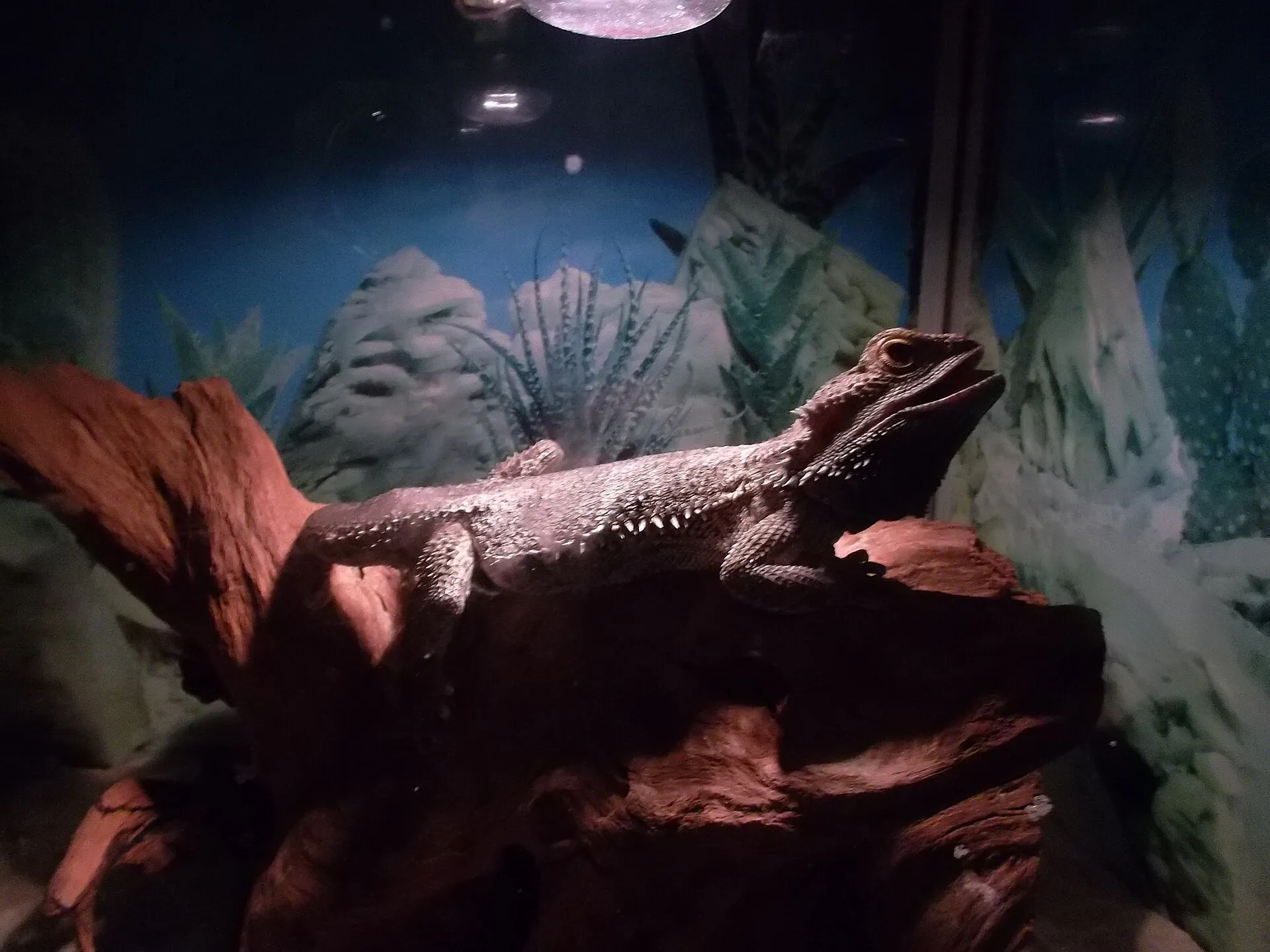 Photo: Fiver, der Hellseher, CC BY-SA 3.0
In this guide
Short answer: a bioactive bearded dragon enclosure is a large arid setup. ReptiFiles now recommends at least 6 × 2 × 2 ft for one adult (others still use 4 × 2 × 2 ft). Provide a basking surface of about 105–113 °F (40–45 °C) with a cooler end in the 70s–80s °F, a T5 HO UVB tube over the basking area, humidity around 30–60%, and 4–6 in (10–15 cm) of a sandy soil mix that stays slightly moist at the bottom. Use hardy, drought-tolerant cleanup crew such as powder isopods and springtails, and give them damp hiding spots.
Enclosure size
The sources don’t agree, and the recommended size has grown over the years:
| Source | Minimum for one adult |
|---|---|
| ReptiFiles | 6 × 2 × 2 ft (183 × 61 × 61 cm), or at least 24 cubic feet of space |
| The Bio Dude | 4 × 2 × 2 ft |
| RSPCA (UK) | 120 × 60 × 60 cm (about 4 × 2 × 2 ft) |
| VCA | 60–100+ gallons for adults |
ReptiFiles accepts 4 × 2 × 2 ft only for unusually small adults under about 18 in (45 cm), and notes that some European groups recommend even more space. For a bioactive build, bigger is easier: more room for plants, a deep substrate and a proper temperature gradient. A front-opening enclosure with a substrate dam of about 6 in (The Bio Dude) keeps the soil in.
Keep one dragon per enclosure. ReptiFiles strongly advises against housing bearded dragons together.
Temperatures
| Zone | ReptiFiles | RSPCA | VCA |
|---|---|---|---|
| Basking surface | 108–113 °F (42–45 °C) | 38–42 °C | 90–100 °F |
| Cool side | 77–85 °F surface | 22–26 °C | 75–80 °F |
| Night | 55–75 °F | Not below 20–22 °C | 65–80 °F at the cool end |
ReptiFiles runs the hottest numbers and VCA the coolest; a 2016 zoo study (the UV-Tool) gives 40–45 °C for the basking surface, in line with ReptiFiles. ReptiFiles suggests several halogen flood bulbs grouped together over the basking spot. Whichever range you follow, use a thermostat, measure the basking surface with an infrared thermometer, and measure air temperature at both ends with probes.
UVB
Bearded dragons need UVB; the MSD Veterinary Manual calls it essential. The usual setup is a T5 HO tube (such as Arcadia 12% or Zoo Med Reptisun 10.0) in a reflector fixture over the warm side.
- Target: ReptiFiles and the RSPCA aim for a UV index of about 3–5 at the basking spot (ReptiFiles: 4.0–4.5), falling to zero in the shade. The UV-Tool study places bearded dragons in Ferguson zones 3–4, open and midday baskers.
- Distance: ReptiFiles puts a 12% T5 HO tube about 11 in (27 cm) above the basking spot when it shines through mesh, or about 16–17 in without mesh. The Bio Dude gives 8–12 in through mesh. A UV meter (Solarmeter) is the only way to know for sure.
- Coverage: ReptiFiles recommends lighting 75–100% of the enclosure length; The Bio Dude and the RSPCA say about half.
- Replace the tube about every 12 months (ReptiFiles, The Bio Dude); VCA says every 6 months or as the maker recommends.
- Sensitive morphs (hypo, translucent, silkback, albino): keep the UVI at no more than about 3.
Plants benefit from an additional bright LED plant light.
Humidity
Most sources give a low range: 30–60% (ReptiFiles, The Bio Dude), 30–40% (RSPCA), or 20–30% (MSD). Bioactive soil raises humidity a little, especially near the damp bottom layer, so measure it at the cool end and ventilate well.
Substrate for an arid bioactive
The substrate must be sandy enough to stay dry on top but contain enough soil to hold burrows and some moisture for plants and the cleanup crew.
- Zen Habitats’ DIY mix: 60% organic topsoil (no fertilizer or perlite) and 40% washed play sand, optionally with excavator clay on top, at least 4–6 in deep.
- The Bio Dude: about 6 in of its Terra Sahara mix, with leaf litter, sphagnum and bark mixed in.
- ReptiFiles: 4–6 in deep. It suggests a ready-made bioactive arid mix; its own DIY sand, soil and clay recipe is labeled as not bioactive-ready.
That’s 80–120 quarts for a 4 × 2 ft floor and 120–180 quarts for a 6 × 2 ft floor (ReptiFiles). Our substrate calculator works it out for your enclosure. See also bioactive substrate mix.
Keep one area moist. Zen Habitats suggests a permanently damp corner under bark or the water dish at the cool end. The Bio Dude pours water into the bottom of the substrate at the cool end, keeping the top dry. This is where the cleanup crew and plant roots survive.
Do you need a drainage layer?
Probably not. The Bio Dude says an arid setup needs no drainage layer, which would only take up space, and Zen Habitats’ arid build skips it too. Some guides still recommend one. In a dry setup where you add only small amounts of water to the bottom, it’s optional. Read more in drainage layer in a bioactive terrarium.
Cleanup crew
Many tropical cleanup crew species won’t survive an arid enclosure. Options from the sources:
- Powder orange or powder blue isopods (Porcellionides pruinosus): The Bio Dude says they handle drier conditions than many isopods but still need humid microclimates.
- Arid-tolerant springtails: they need damp hides and a moist lower layer (Swell Reptiles).
- Beetles: The Bio Dude lists blue death-feigning beetles and darkling beetles. Mealworms and superworms can bite, so The Bio Dude suggests feeding them separately.
- Avoid dwarf whites: they need constant high humidity.
Bearded dragons will eat some of the crew. A large enclosure with plenty of hiding places under bark and stone helps the colony keep up. See best isopods for leopard geckos, which covers similar arid species, and how many isopods and springtails you need.
Plants
ReptiFiles suggests drought-tolerant plants such as haworthia, gasteria, echeveria, jade (Crassula ovata), elephant bush (Portulacaria), spineless prickly pear, sempervivum, agave, Carex and Festuca grasses and Tillandsia. Plant them on the cooler side, where they won’t cook under the basking lamp. Expect the dragon to dig and nibble.
See best plants for a bioactive terrarium.
Hardscape
- Basking platform: ReptiFiles suggests flat stone (it holds heat and files claws) or cork.
- Hides and burrows at both ends.
- Sturdy branches and ledges for climbing. ReptiFiles advises against hammocks, which can catch claws.
- Make sure heavy rocks can’t shift if the dragon digs under them. Many keepers place them on the enclosure floor before adding substrate.
Is sand safe? The impaction debate
This is one of the most debated topics in bearded dragon care:
- ReptiFiles argues that a proper sand and soil mix doesn’t cause impaction by itself, and that dehydration, low temperatures and parasites are the real causes. It warns against calcium sand.
- VCA advises against sand and all loose substrates because of the blockage risk, and suggests paper or reptile carpet.
- The RSPCA accepts reptile-safe sand or a sand and soil mix for healthy adults, but not calci-sand, bark, walnut shell or corn cob.
A 2017 study of 529 bearded dragon vet patients found digestive problems were the most common category, including parasites, constipation and sand ingestion. Among constipated dragons, more than half had parasites and many had calcium or bone problems. The study doesn’t say which substrates caused problems, so it can’t settle the debate. Good heat, UVB, hydration and feeding insects in a dish all reduce the risk.
Maintenance
From Zen Habitats’ arid bioactive routine:
- Daily: remove visible waste, check water and temperatures.
- Weekly: water plants and the damp corner, remove uneaten food.
- Monthly: add leaf litter.
- Every 6–12 months: top up or replace the top 1–2 in of substrate.
Let the enclosure run for a couple of weeks before the dragon moves in, so the plants root and the cleanup crew settles. New to bioactive setups? Start with how to set up a bioactive terrarium, and compare with our bioactive leopard gecko setup.
Frequently asked questions
Can bearded dragons have a bioactive enclosure?
Yes. It has to be an arid setup with a mostly dry surface, a slightly moist lower layer and hardy, drought-tolerant plants and cleanup crew.
What size enclosure does a bearded dragon need?
ReptiFiles recommends at least 6 × 2 × 2 ft for one adult. Many other sources still use 4 × 2 × 2 ft (120 × 60 × 60 cm) as the minimum.
What isopods are best for a bearded dragon bioactive?
Hardy species that tolerate drier conditions, such as powder orange or powder blue isopods. They still need damp hiding spots.
What temperature should a bearded dragon basking spot be?
About 105–113 °F (40–45 °C) on the basking surface according to ReptiFiles. Veterinary sources such as VCA give lower values, around 90–100 °F.
Sources
- Bearded dragon enclosure size and cohabitation (ReptiFiles)
- Bearded dragon lighting, heating and humidity (ReptiFiles)
- Bearded dragon substrate options (ReptiFiles)
- Bearded dragon environmental enrichment (ReptiFiles)
- How much UV-B does my reptile need? The UV-Tool (Baines et al., Journal of Zoo and Aquarium Research 2016)
- Important husbandry requirements for selected reptiles (MSD Veterinary Manual)
- Bearded dragons: housing (VCA Animal Hospitals)
- How to care for your bearded dragon (RSPCA)
- Bearded dragon caresheet and bioactive habitat care (The Bio Dude)
- Yes, you can have an arid bioactive setup (The Bio Dude)
- How to build a bioactive enclosure for arid reptiles (Zen Habitats)
- Powder isopod care sheet (The Bio Dude)
- A survey of diseases in captive bearded dragons: 529 patients (Schmidt-Ukaj et al., Veterinarni Medicina 2017)
- Aloe (ASPCA)
- Snake plant (ASPCA)
- Aloe (The Tortoise Table)
- Custodians: what does bioactive actually mean? (Swell Reptiles)