Bioactive Leopard Gecko Setup: Enclosure, Substrate and Cleanup Crew
How to build a bioactive leopard gecko enclosure: size, heat and UVB, an arid substrate mix, the humid hide, which isopods survive, safe plants and the sand impaction debate.
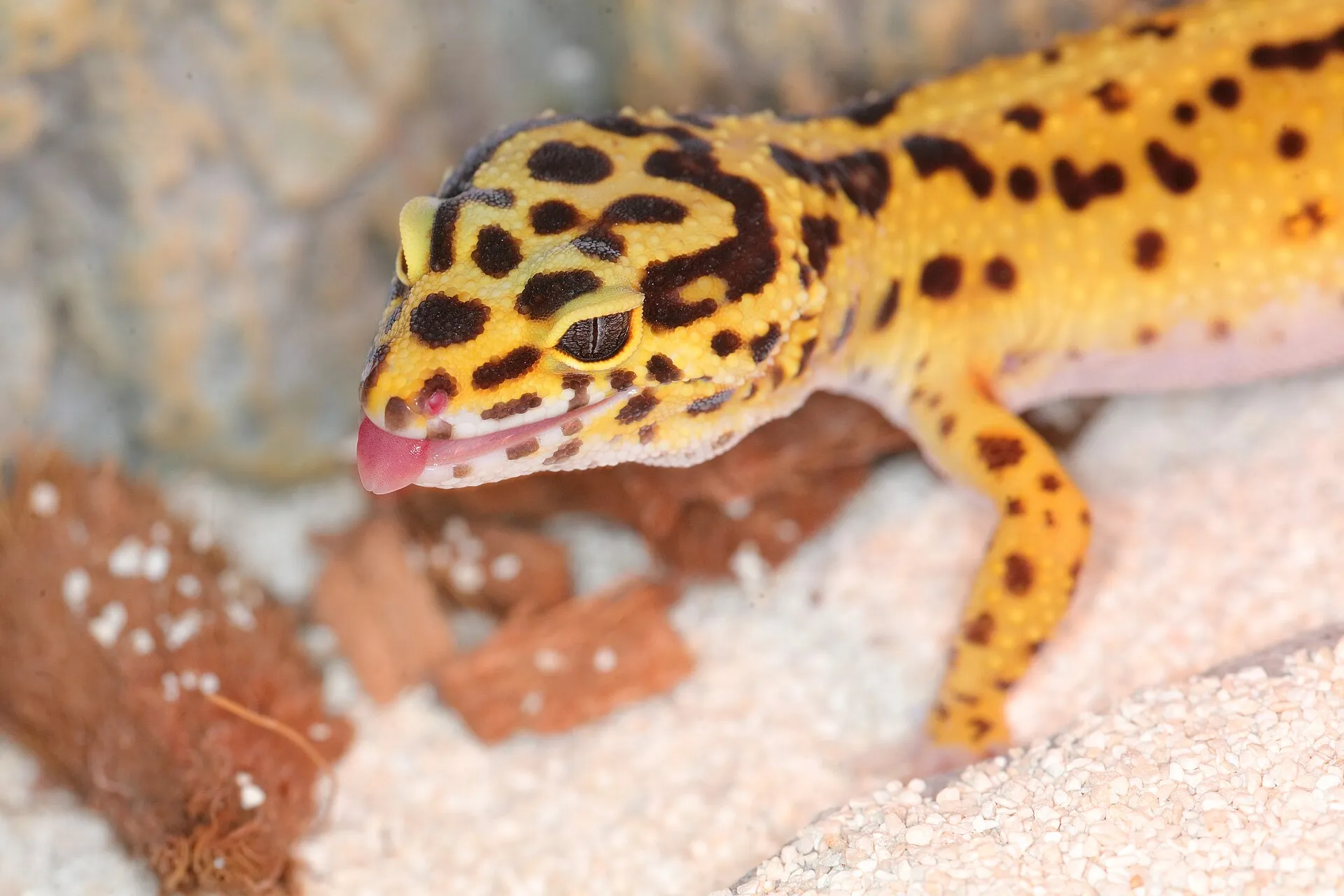 Photo: Christian von Faber-Castell, CC BY 4.0
In this guide
Short answer: a bioactive leopard gecko enclosure is an arid setup: a mostly dry, sandy soil with a small damp zone under the humid hide where the cleanup crew lives. Use at least a 36 × 18 × 18 in enclosure (ReptiFiles’ minimum for one adult), a soil mix of roughly 60% topsoil, 30% sand and 10% clay at least 4 in (10 cm) deep, a heat lamp on a thermostat, low-level UVB, drought-tolerant plants and hardy isopods such as powder oranges or dairy cows. Let it settle for a few weeks before the gecko moves in.
Enclosure size
Leopard geckos live on the ground, so floor space matters most.
| Source | Minimum for one adult |
|---|---|
| ReptiFiles | 36 × 18 × 18 in (about 90 × 45 × 45 cm), at least 4.5 sq ft of floor |
| RSPCA | 60 × 30 cm floor, 40 cm high (about 24 × 12 × 16 in), “as large as possible” |
The two minimums differ a lot. Both say bigger is better, and a bioactive build benefits from the extra room for a dry side and a damp side. ReptiFiles advises keeping leopard geckos alone, since housing them together can lead to bites and dropped tails.
Heat and temperatures
| Zone | ReptiFiles | RSPCA |
|---|---|---|
| Basking surface | 94–97 °F (34–36 °C) | Hot end 28–30 °C (82–86 °F) |
| Warm hide | 90–92 °F (32–33 °C) | |
| Cool end | 70–77 °F (21–25 °C) | 24–26 °C (75–79 °F) |
| Night | Can drop to about 60 °F (16 °C) | Heat off unless the room falls below 18 °C |
Sources disagree on exact numbers, but they agree on the method: a gradient from warm to cool, every heat source on a thermostat, and digital thermometers to check. ReptiFiles suggests a halogen heat lamp (around 50 W to start) over a basking spot. If you use a heat mat, note that a deep bioactive substrate insulates it; Gecko Time kept the floor inside its warm caves bare for that reason.
UVB lighting
Leopard geckos are active at dusk and dawn and are classed as Ferguson Zone 1 (shade dwellers), so they need only a little UVB:
- ReptiFiles: a UV index of about 0.5–1.5 at the basking spot (0.5–0.7 for albino morphs), for example an Arcadia ShadeDweller tube at the distance its maker recommends. Replace T5 tubes about every 12 months.
- RSPCA: a 2–5% UVB tube covering a third to half of the enclosure at the warm end, about UVI 0.7 at the basking spot.
UVB also helps the plants grow, which is a bonus in a bioactive build. A light cycle of 12–14 hours is standard.
The substrate
An arid bioactive soil should be firm enough to hold burrows and dry on top. ReptiFiles’ DIY mix:
| Ingredient | Share by volume |
|---|---|
| Organic topsoil (no fertilizer or perlite) | 60% |
| Play sand | 30% |
| Excavator clay or bentonite clay | 10% |
Moisten the mix, pack it firmly, and let it dry completely before adding the gecko. Use at least 4 in (10 cm) of substrate. Our bioactive substrate mix guide has a similar arid recipe, and the substrate calculator works out how much you need for your enclosure.
ReptiFiles warns against calcium sand, coco fiber on its own, mulch and wood shavings.
Do you need a drainage layer?
Usually not. Arid enclosures get very little water, so most keepers skip it (see drainage layer in a bioactive terrarium). Some builders, like Gecko Time, add a thin drainage layer only under the damp zone. That’s optional.
The humid hide and damp zone
Leopard geckos need a humid hide to shed properly, and the cleanup crew needs moisture to survive, so these two needs share one spot.
- ReptiFiles recommends at least two hides: a warm, humid one and a cool, dry one. The humid hide should be about 70–80% humidity, placed in the middle to cool side.
- Keep the rest of the enclosure at about 30–40% humidity.
- Keep the substrate under and around the humid hide damp by pouring in a little water. The open floor stays dry.
ReptiFiles advises lining the humid hide with moist substrate rather than sphagnum moss or paper towel, because a gecko can swallow them while feeding.
Cleanup crew
No isopod is truly desert-proof. They all need the damp zone. Good choices:
- Powder orange / powder blue (Porcellionides pruinosus): fast breeding; Terrarium Tribe recommends humidity above 50% with at least one moist area.
- Dairy cow (Porcellio laevis): large and active. The Bio Dude notes it lives where “humidity remains available despite relatively dry surface conditions” and needs damp retreats to molt.
- Common pill bugs (Armadillidium vulgare) did well in Gecko Time’s build.
- Springtails will survive around the damp zone and help with mold, but won’t spread across a dry floor.
Read more in best isopods for leopard geckos and isopods vs springtails. Your gecko may eat some isopods, which is fine, but keep a separate culture to restock.
Gecko Time also used darkling beetles (the adults of mealworms and superworms). It warns that feeder insects can carry parasites and suggests periodic fecal tests with your vet.
Plants
Choose drought-tolerant plants, ideally in hidden pots so digging doesn’t uproot them. Gecko Time used potted Haworthia, which the ASPCA lists as non-toxic to cats and dogs. Note that some popular “arid terrarium” plants, such as snake plant and aloe, are listed by the ASPCA as toxic to cats and dogs.
There are no studies on plant toxicity for leopard geckos. They’re insectivores and rarely eat plants, but it’s sensible to choose plants considered non-toxic. See best plants for a bioactive terrarium for more.
Is loose substrate safe? The impaction debate
This is the most argued topic in leopard gecko care, and there’s no controlled study to settle it:
- ReptiFiles argues that a natural soil-sand mix doesn’t cause impaction in a healthy gecko. It names dehydration, low temperatures, vitamin D deficiency, poor diet and parasites as the main causes. It cites studies on bearded dragons, not on leopard geckos.
- Some exotic vets disagree. The Long Island Bird & Exotics Veterinary Clinic advises against loose substrate for leopard geckos and recommends tile or paper towel.
- A case report in Vet Times describes surgery on a leopard gecko whose gut was blocked with sand. That gecko was also kept with poor heat, UVB and calcium, so the sand wasn’t the only factor.
What everyone agrees on: correct heat, UVB, diet and hydration are essential either way. Only put a gecko on loose substrate if it’s healthy, avoid calcium sand, and feed from a dish or with tongs if you’re worried. If your gecko stops pooping, seems bloated or stops eating, see a reptile vet.
Setting it up step by step
- Build the hardscape (rocks, caves, cork) and fix heavy rocks to the floor so the gecko can’t dig under them.
- Add the substrate, moisten and pack it, and shape slopes.
- Plant drought-tolerant plants and add leaf litter in the damp zone.
- Let it dry and settle. Gecko Time dried the soil for about a week and then ran the enclosure for about a month, aiming for surface humidity below 60%.
- Add the cleanup crew to the damp zone.
- Check temperatures and UVB with a thermometer and UV meter, then add the gecko.
Maintenance
- Remove poop you can see; the crew handles the rest, but spot-cleaning keeps odors and pests down.
- Fresh water in a shallow dish every day (RSPCA).
- Water the damp zone and plants every week or two; less in winter.
- Feed the cleanup crew small amounts if numbers drop.
- Avoid rearranging décor often; ReptiFiles notes changes can stress a gecko for 1–2 weeks.
Building a larger desert setup? See our bioactive bearded dragon enclosure.
Frequently asked questions
Can leopard geckos be bioactive?
Yes. It’s an arid bioactive setup: a dry, sandy soil with a damp zone under the humid hide for isopods and springtails.
What substrate is best for a bioactive leopard gecko?
A mix of organic topsoil, sand and clay, such as ReptiFiles’ 60/30/10 recipe, packed firmly and at least 4 in deep. Avoid calcium sand.
What isopods can live with leopard geckos?
Hardy species that tolerate drier conditions, like powder oranges, powder blues and dairy cows, as long as they have a permanently damp area.
Does sand cause impaction in leopard geckos?
It’s debated. Some experts say a natural soil-sand mix is safe for healthy geckos with correct care; some vets advise against any loose substrate. There’s no controlled study either way.
Sources
- Leopard gecko enclosure size (ReptiFiles)
- Leopard gecko lighting, heating and humidity (ReptiFiles)
- Leopard gecko substrate (ReptiFiles)
- Leopard gecko decor (ReptiFiles)
- Does loose substrate cause impaction? (ReptiFiles)
- Leopard gecko care sheet (RSPCA)
- Understanding Ferguson zones (Exo Terra)
- Creating a bioactive leopard gecko setup (Gecko Time)
- Loose substrate for reptiles and amphibians (Long Island Bird & Exotics Veterinary Clinic)
- Gastrointestinal obstruction in a leopard gecko (Vet Times)
- Dairy cow isopod care sheet (The Bio Dude)
- Powder orange isopods (Terrarium Tribe)
- Haworthia (ASPCA plant list)