Best Plants for a Bioactive Terrarium (Tropical and Arid)
The most reliable live plants for tropical and arid bioactive terrariums, with light and humidity needs, toxicity notes, and how to clean store-bought plants.
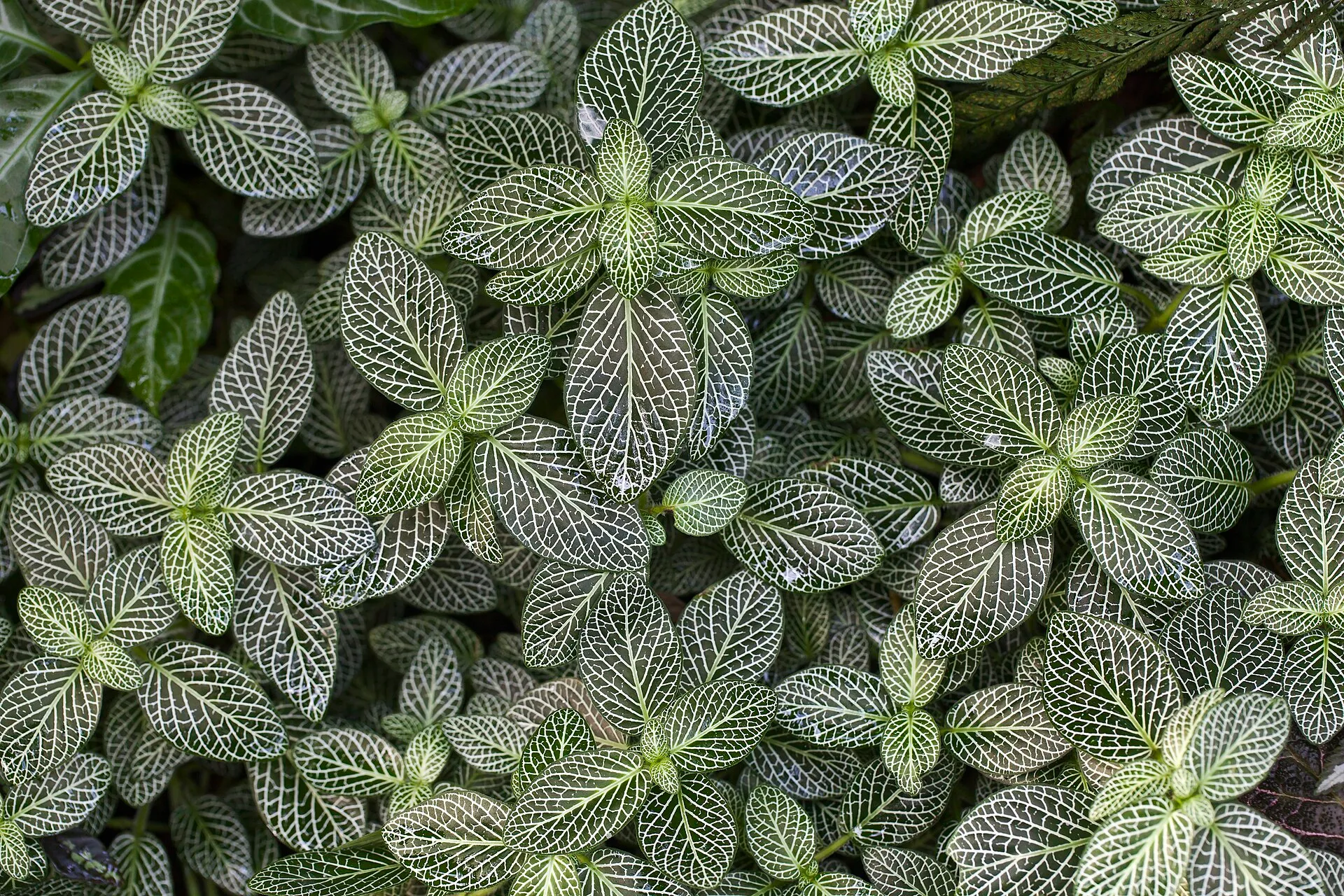 Photo: Diego Delso, CC BY-SA 3.0
In this guide
Short answer: for a tropical bioactive terrarium, the most reliable plants are pothos, heartleaf philodendron, Fittonia, bromeliads, Peperomia, prayer plants and creeping fig. For an arid setup, use snake plant, Haworthia and Echeveria. Whatever you pick, clean and quarantine store-bought plants first and give them a proper plant light, because UVB bulbs alone are too weak for most plants.
Tropical plants
| Plant | Light | Size and habit | Notes |
|---|---|---|---|
| Pothos (Epipremnum aureum) | Bright indirect; tolerates low light | Vine; trims easily | The toughest choice for most enclosures |
| Heartleaf philodendron (Philodendron hederaceum) | Medium; tolerates very low light | Vine | Similar to pothos, with softer leaves |
| Fittonia (nerve plant) | Bright to medium, no direct sun | 3–8 in tall, spreading | Wilts dramatically when dry and recovers after watering |
| Bromeliads (Neoregelia and others) | Bright indirect to high | Rosettes; can be mounted on the background | The water in the central cup should be refreshed |
| Peperomia (P. obtusifolia and others) | Bright indirect | Compact, up to about 2 ft | Doesn’t like soggy soil |
| Prayer plant (Maranta leuconeura) | Bright indirect | 6–12 in tall, spreading | Likes high humidity |
| Creeping fig (Ficus pumila) | Bright indirect | Climber that clings to backgrounds | Vigorous; trim often or it takes over |
| Aluminum plant (Pilea cadierei) | Bright indirect | Small, bushy | Easy and fast-growing |
| Bird’s nest fern (Asplenium nidus) | Bright light or light shade | Grows slowly to a large rosette | Best for larger enclosures |
Sizes and light needs are from the NC State Extension Plant Toolbox. Bromeliad cups are also where some dart frogs deposit tadpoles, so they’re popular in frog vivariums.
Arid plants
| Plant | Light | Notes |
|---|---|---|
| Snake plant (Dracaena trifasciata, formerly Sansevieria) | Tolerates very low light | Let the soil dry between waterings |
| Haworthia | Bright indirect; direct sun can scorch it | Small, slow, water sparingly |
| Echeveria | Bright | Rosette succulent; needs strong light |
Arid plants rot if the soil stays wet, so water them at the roots and only occasionally. If your arid enclosure has a moist hide for shedding, keep plants away from it.
Are these plants safe for reptiles?
This is the honest picture: there are no toxicity studies on reptiles or amphibians for common terrarium plants. The lists people quote (like the ASPCA’s) are for dogs, cats and horses.
- Pothos and philodendron contain calcium oxalate crystals, which irritate the mouth if chewed. They’re toxic to cats and dogs, but they’ve been used in reptile and frog enclosures for decades. Most insect-eating reptiles don’t eat them. Breeders like Josh’s Frogs consider pothos safe but note that cautious keepers may prefer to avoid it.
- Creeping fig has milky sap that NC State flags for pets.
- Snake plant contains saponins (low severity for pets).
- Fittonia, Peperomia, Pilea, Haworthia and Echeveria are listed as non-toxic by the ASPCA or NC State.
How to prepare store-bought plants
Garden center plants are often treated with systemic pesticides, which can stay in the plant tissue for weeks or months and can kill isopods and springtails (and potentially the animal). The usual steps:
- Remove the old soil. Rinse the roots thoroughly and pick out fertilizer pellets and perlite (we recommend removing anything that isn’t soil).
- Clean the leaves. The Bio Dude recommends a dilute bleach or hydrogen peroxide spray, followed by a thorough rinse. Recommended strengths vary between sources, so follow one guide closely.
- Repot in clean organic soil without added fertilizer.
- Quarantine for at least a month. Some sources suggest 30–60 days, with deep watering to flush the soil.
The Bio Dude lists untreated plants as a common cause of a “bioactive crash”, where the cleanup crew dies off. Plants from vivarium suppliers are usually sold ready to use, though a rinse is still a good idea.
Lighting for plants
According to ReptiFiles:
- UVB bulbs are too weak to grow most plants, and too much UV can burn leaves.
- Use a full-spectrum white LED plant light around 5000–7000K.
- Shade plants need modest light, while sun-loving plants need much more.
- Tall or densely planted enclosures need a light across the full length.
- Avoid red/blue-only “blurple” lights, which can be hard on animals’ eyes.
Plants for heavy or climbing animals
Large lizards and snakes flatten delicate plants. ReptiFiles notes that most plants aren’t built to be trampled, so choose tough ones (pothos, snake plant), use bigger pots or established plants, and expect to replace some over time. Arboreal geckos and chameleons need sturdy plants with strong stems to climb.
For full setups, see the bioactive crested gecko enclosure, the bioactive ball python enclosure and how to set up a bioactive terrarium.
Planting tips
- Plant into the bioactive substrate, not into a leftover pot of garden soil.
- Group plants with similar light and water needs.
- Leave open ground for the animal and for leaf litter, which feeds the cleanup crew.
- Expect some leaves to die back while plants adjust; the cleanup crew will eat them.
Frequently asked questions
What is the easiest plant for a bioactive terrarium?
Pothos. It tolerates low light, uneven watering and climbing animals, and it grows back quickly after trimming.
Do I need a special light for terrarium plants?
Yes, in most cases. Room light and UVB bulbs aren’t strong enough. A full-spectrum LED plant light is the standard choice.
Can I use plants from a hardware store?
Yes, if you remove the soil, clean the plant and quarantine it for at least a month to let pesticides break down.
Are succulents good for a bioactive terrarium?
Only in arid setups. In a humid tropical enclosure, most succulents rot.
Sources
- Epipremnum aureum (NC State Extension Plant Toolbox)
- Fittonia albivenis (NC State Extension Plant Toolbox)
- Peperomia obtusifolia (NC State Extension Plant Toolbox)
- Ficus pumila (NC State Extension Plant Toolbox)
- Dracaena trifasciata (NC State Extension Plant Toolbox)
- Toxic and non-toxic plants list (ASPCA)
- Plant lights for bioactive enclosures (ReptiFiles)
- Live plants vs fake plants (ReptiFiles)
- How to clean plants before adding them to your vivarium (The Bio Dude)
- Are hardware store plants safe for reptiles? (Zen Habitats)