Bioactive Ball Python Enclosure Setup
How to set up a bioactive enclosure for a ball python: enclosure size, substrate depth, plants, cleanup crew, temperatures, humidity and maintenance.
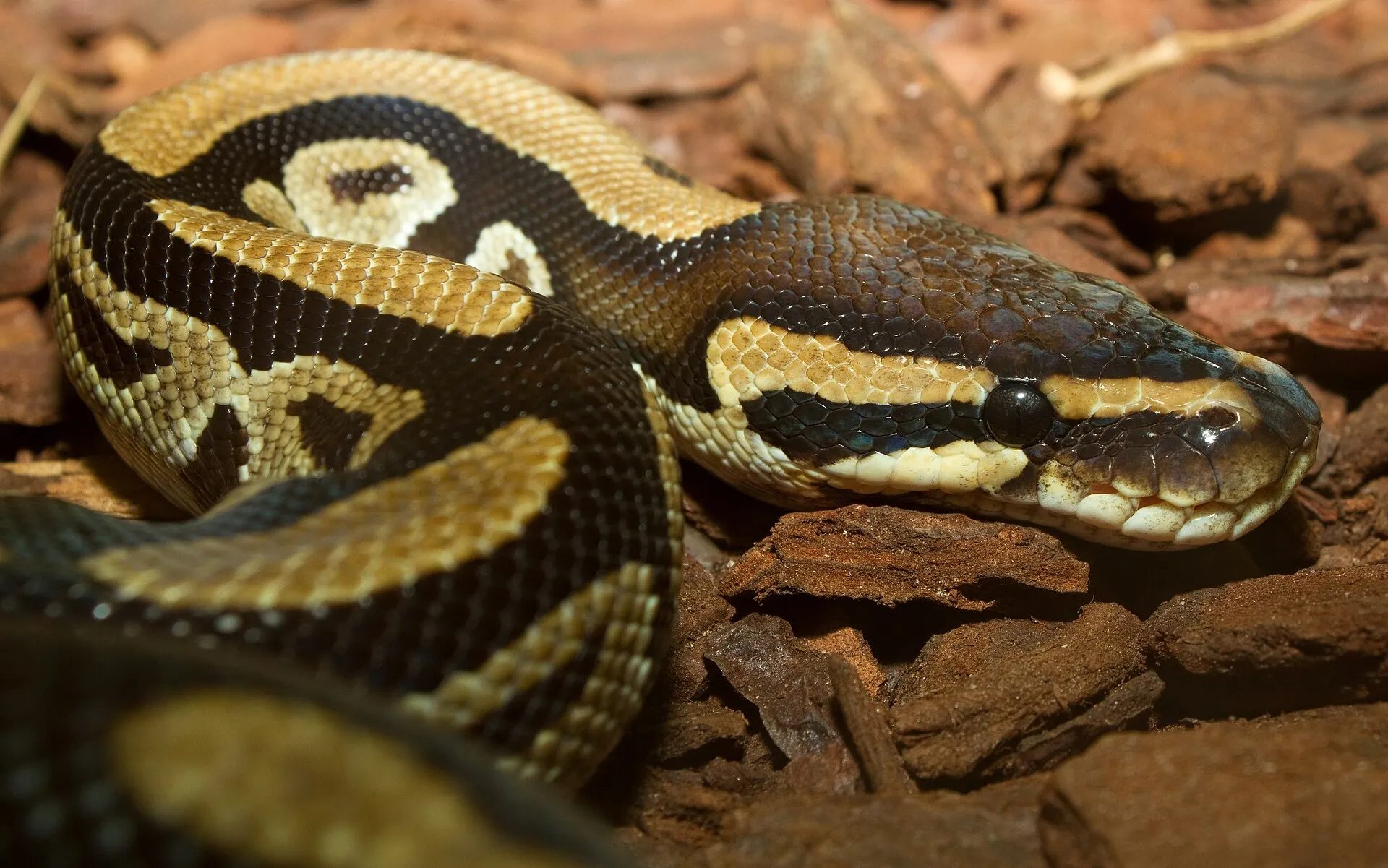 Photo: Brian Gratwicke, CC BY 2.0
In this guide
Short answer: ball pythons do well in bioactive enclosures. For an adult, a 4 × 2 × 2 ft (120 × 60 × 60 cm) enclosure is the common minimum. Use 4–6 in of tropical bioactive substrate over a drainage layer, sturdy plants, tight hides on both sides, and a cleanup crew of isopods and springtails. Common targets are a basking area around 86–90 °F (30–32 °C), a cool side around 72–80 °F (22–27 °C) and humidity around 60–80%.
Enclosure
Ball pythons from West and Central Africa are mostly ground-dwelling and like to hide, but they do climb.
| Recommendation | |
|---|---|
| Adult | 4 × 2 × 2 ft (120 × 60 × 60 cm) minimum; larger for big females |
| Material | PVC or glass with solid sides holds humidity better than mesh |
| Lid | Secure; ball pythons push at gaps |
Adult females can grow noticeably larger than males, so a 4 × 2 × 2 is a minimum, not a generous size.
Substrate and layers
Follow our step-by-step bioactive setup:
- Drainage layer: about 1–2 in of clay balls. See do you need a drainage layer.
- Mesh barrier
- Bioactive substrate: 4–6 in deep. Ball pythons like to burrow under cork and roots, and deeper soil holds humidity better. See our substrate mix recipe.
- Leaf litter on top
Our Substrate Calculator shows how much to buy for a 4 × 2 ft floor.
Hides and decor
- At least two tight hides, one on the warm side and one on the cool side. Ball pythons feel safe in snug spaces.
- Cork flats and tubes, partly buried, make natural burrows.
- Branches for occasional climbing.
- A water bowl large enough to soak in.
Plants
Ball pythons are heavy and flatten delicate plants. Choose tough, large-leaved plants:
- Pothos (Epipremnum)
- Snake plant (Sansevieria / Dracaena trifasciata)
- Dracaena species
- Bird’s nest fern in a protected spot
- Philodendrons
Cleanup crew
Ball pythons don’t produce much waste, which suits bioactive well. You’ll still remove large waste and uneaten prey by hand.
- Isopods: powder orange or blue, Porcellio scaber and dwarf whites all work in a humid python setup. See the best isopods for beginners and dwarf white isopod care.
- Springtails for mold control. See how to culture springtails.
Temperature, humidity and light
| Common target | |
|---|---|
| Basking area (air) | About 86–90 °F (30–32 °C) |
| Cool side | About 72–80 °F (22–27 °C) |
| Night | Not much below the low 70s °F (about 22 °C) |
| Humidity | About 60–80%, higher during shedding |
| Lighting | Day/night cycle; many keepers add low-level UVB and plant lights |
Maintenance
- Spot-clean waste and remove uneaten food.
- Mist or water the substrate to keep humidity in range, and let the surface dry a little in between to avoid mold.
- Top up leaf litter as the isopods eat it.
- Let the enclosure settle for 2–4 weeks before the snake moves in.
Frequently asked questions
Can ball pythons live in a bioactive enclosure?
Yes. Their humidity needs and low waste output make them a good fit.
What size bioactive enclosure does a ball python need?
4 × 2 × 2 ft is the common minimum for an adult. Larger is better, especially for big females.
Will my ball python eat the isopods?
No. Ball pythons eat rodents, not invertebrates. The cleanup crew is safe.
How deep should bioactive substrate be for a ball python?
Around 4–6 in. Deeper substrate holds humidity better and lets plants root well.