Best Isopods for Leopard Geckos (Arid Bioactive Setups)
Which isopods work in a leopard gecko enclosure? The best species for arid bioactive setups, how to give them a moist zone, and what to avoid.
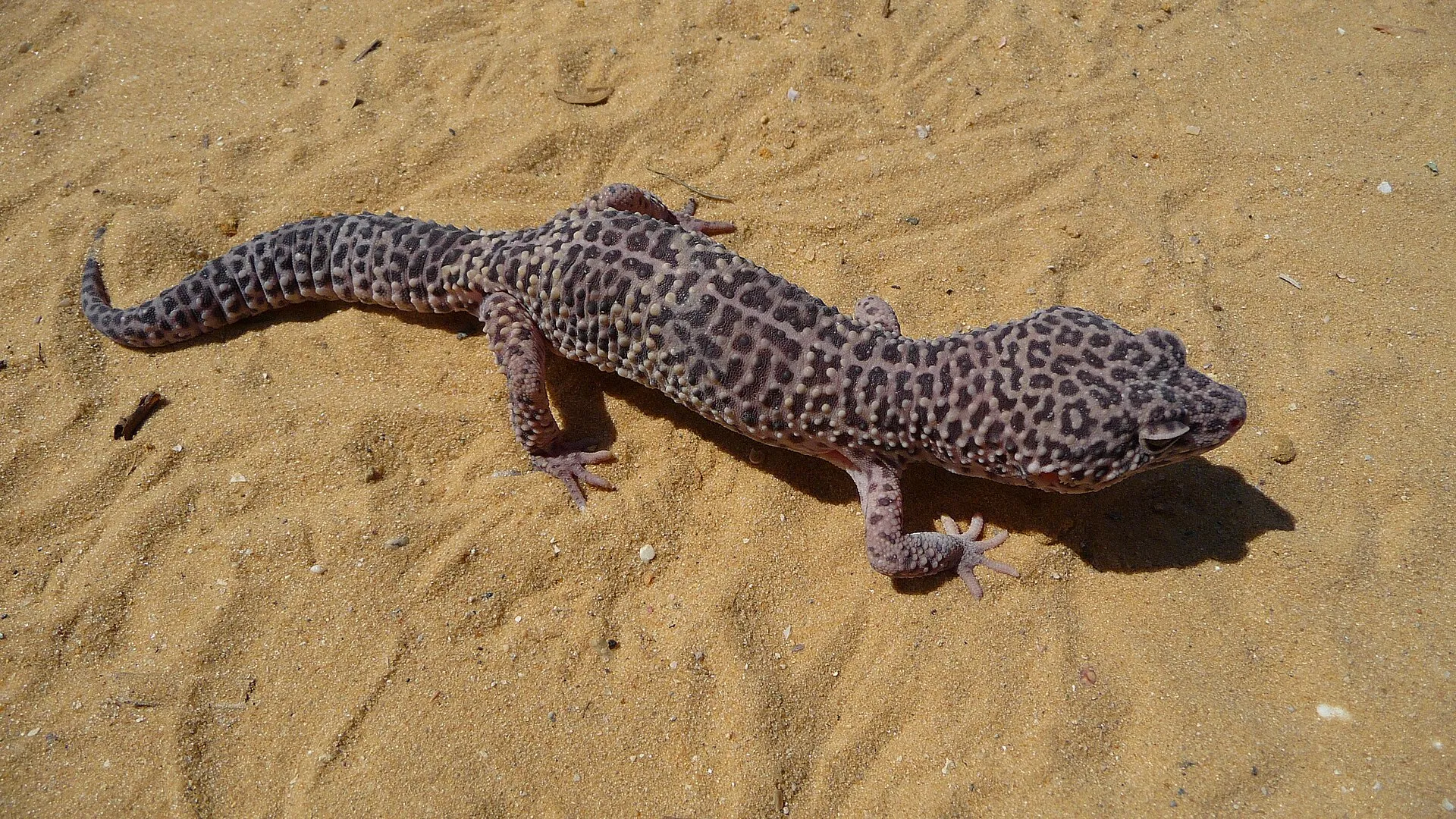 Photo: George Chernilevsky, Public domain
In this guide
Short answer: for a leopard gecko enclosure, choose isopods that tolerate drier conditions: powder orange or powder blue (Porcellionides pruinosus), dairy cow (Porcellio laevis), Porcellio scaber, and Armadillidium species such as A. vulgare or zebras. Even these need a permanently moist zone, usually under the gecko’s humid hide. Skip species that need constant high humidity, like dwarf whites.
Why isopods need special care in an arid enclosure
Leopard geckos come from dry, rocky grasslands and semi-deserts. Their enclosure is mostly dry. Isopods, on the other hand, breathe through moist gill-like structures and lose water quickly. They can’t live in an enclosure that is dry everywhere.
The solution is a moisture gradient: the open floor stays dry for the gecko, and a small area stays damp for the cleanup crew. Leopard geckos need a humid hide for shedding anyway, so the two needs fit together well.
The best species
| Species | Why it works | Watch out for |
|---|---|---|
| Powder orange / powder blue (Porcellionides pruinosus) | Fast breeding, active, handles semi-arid conditions with a moist area | Can crash if food runs out |
| Dairy cow (Porcellio laevis) | Large, active, strong cleaner | Needs a clear moisture zone; big, so feed it well |
| Porcellio scaber | Hardy, tolerates drier conditions than many species | Larger species may nibble seedlings if hungry |
| Armadillidium vulgare and zebras (A. maculatum) | Good tolerance for drier substrate with shelter | Slower breeding |
More about these species in the best isopods for beginners and our zebra isopod care guide.
What about dwarf whites?
Dwarf white isopods (Trichorhina tomentosa) need consistently high humidity. They’re excellent in tropical setups but generally not a good fit for an arid leopard gecko enclosure. See our dwarf white isopod care guide.
And springtails?
Springtails need moisture too. In a leopard gecko enclosure they’ll mostly live in and around the humid hide, where they help control mold. That’s fine. Just don’t expect them across the whole floor.
How to set up the moist zone
- Choose one area, usually under or around the humid hide, about a quarter of the floor or less.
- Keep that substrate damp by pouring a little water into it every few days. The rest of the floor stays dry.
- Line the humid hide with moist substrate and add some leaf litter and cork bark on top of the damp area. ReptiFiles advises against sphagnum moss inside the hide, because a gecko can swallow it while feeding.
- Put the isopods in the moist zone when you add them, ideally before the gecko moves in.
- Feed the isopods a little extra (vegetables, a protein food) now and then. An arid enclosure has less natural food than a tropical one.
Our Substrate Calculator helps you work out how much substrate to buy for the enclosure.
For the whole enclosure, from heat and UVB to plants, see our bioactive leopard gecko setup.
Will my leopard gecko eat the isopods?
It might eat some, especially active surface species like powders. That’s generally not a problem, but isopods shouldn’t be thought of as a staple food. Keep a separate isopod culture so you can restock the enclosure if numbers drop. See how to breed isopods faster.
Frequently asked questions
Do leopard geckos need isopods?
No. Isopods are only needed if you run a bioactive enclosure. They break down waste, shed skin and leftover food.
How many isopods should I add?
A starter culture of 10–20 isopods plus some springtails is a common start. They multiply in the moist zone if they have enough food.
Can isopods survive in a dry enclosure?
Not without moisture. Every terrestrial isopod needs a damp area to retreat to, even arid-tolerant species.
Are dwarf white isopods good for leopard geckos?
Usually not. They need constant high humidity, which doesn’t suit an arid enclosure.