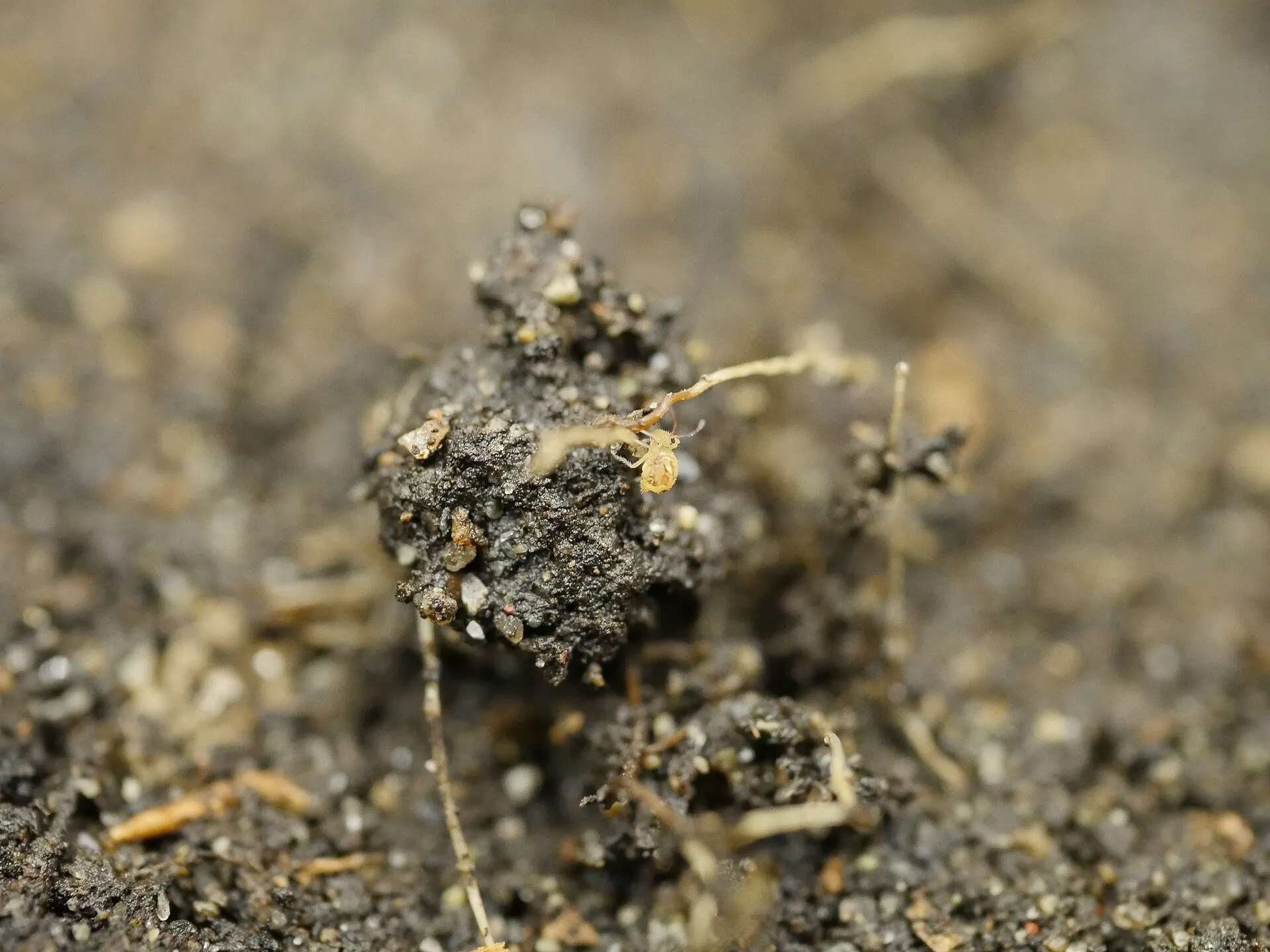
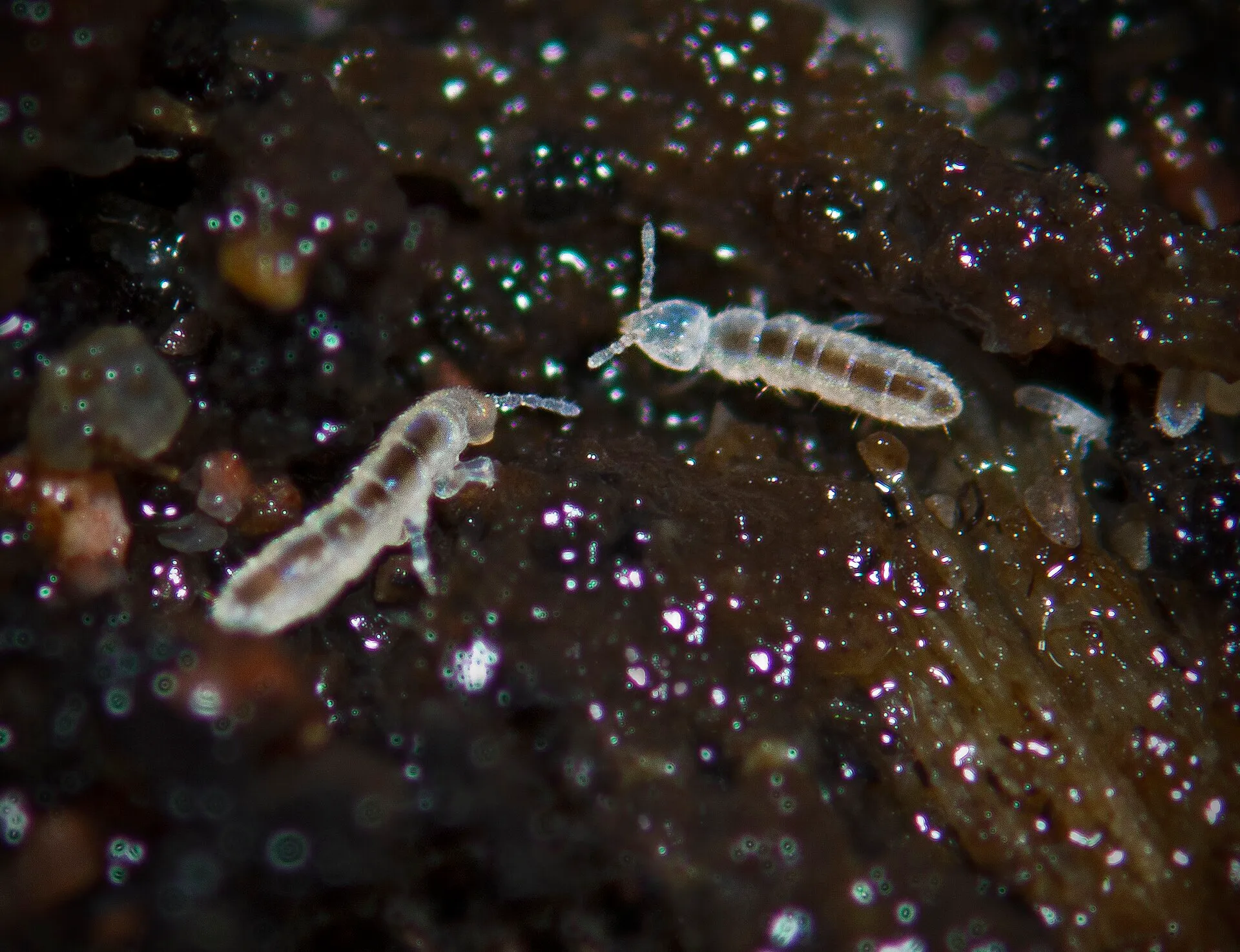
Isopods vs Springtails: Do You Need Both?
What isopods and springtails each do in a bioactive terrarium, how they differ in size, diet and humidity needs, and when it makes sense to use both.
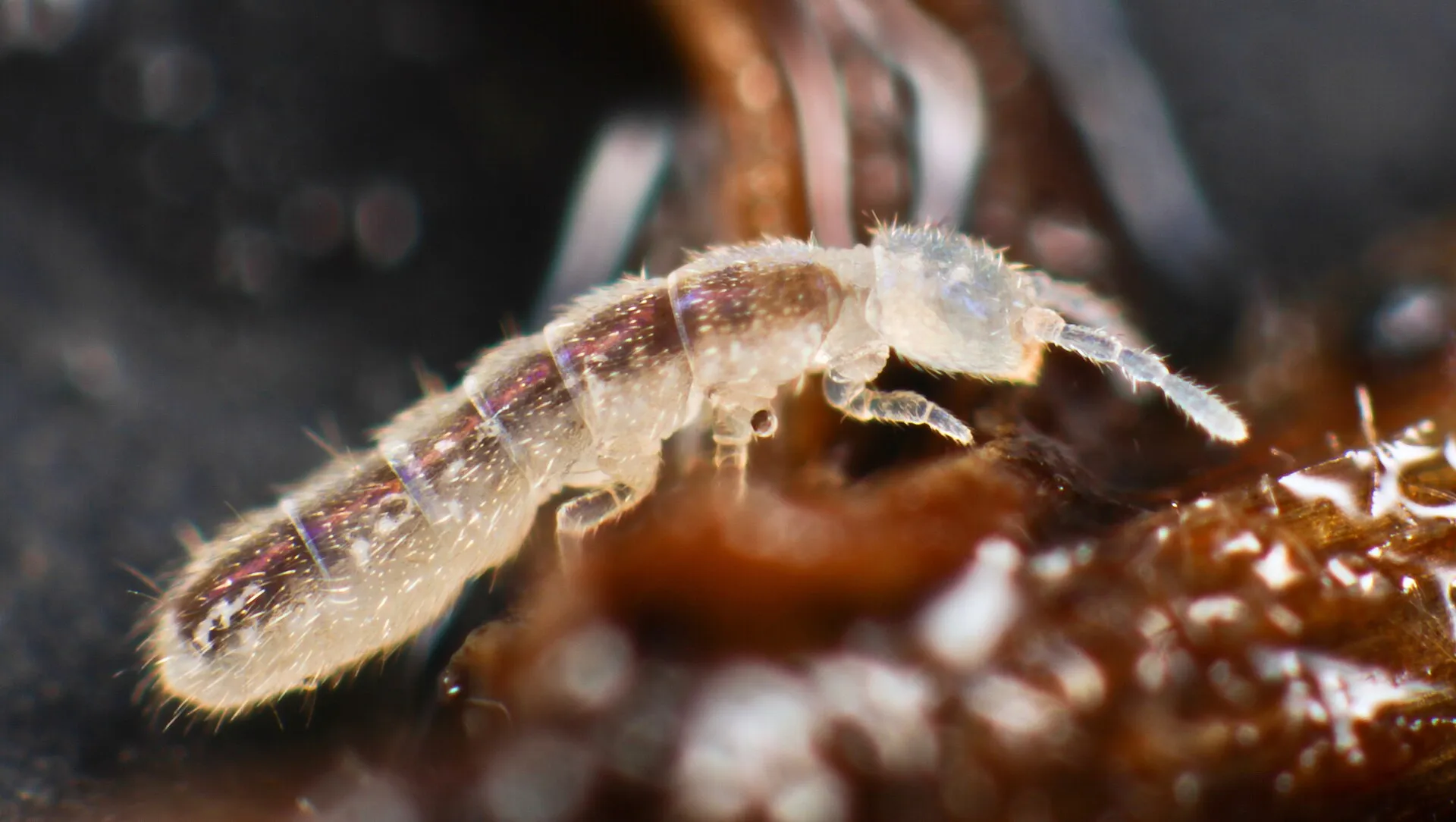 Photo: Andy Murray, CC BY-SA 2.0
In this guide
Short answer: in most humid bioactive terrariums, yes, use both. Springtails are tiny and handle mold, fungi and fine waste. Isopods are bigger and break down leaf litter, wood and larger waste. They do different jobs and generally get along. In a dry desert setup, the choice is harder: many species struggle there, so pick hardy ones and keep a moist corner.
The quick comparison
| Springtails | Isopods | |
|---|---|---|
| What they are | Hexapods, not true insects (Collembola) | Crustaceans, related to shrimp and crabs |
| Typical size | About 1–4 mm in the hobby (most species under 6 mm) | From under 6 mm (dwarf whites) to about 2.5 cm |
| Main food | Mold, fungal hyphae, spores, bacteria, fine waste | Leaf litter, rotting wood, waste, decaying plant matter |
| Main job | Keeping mold in check | Breaking down larger debris |
| Humidity | High; tropical species die if the enclosure dries out | Need a damp area, even species sold for drier setups |
| Added | Early, even before the animal | Once there’s some decaying material to eat |
What springtails do
Springtails graze on fungi, spores and bacteria, which makes them the main defense against the white mold that often appears in a new enclosure. Keepers report that a colony can strip a piece of mushroom within a day.
They breathe through their body surface, so they dry out easily. A tropical springtail culture that dries out completely usually crashes. Temperate species are more forgiving of short dry periods.
Read more in how to culture springtails and mold in a bioactive terrarium.
What isopods do
Isopods are detritivores. They prefer partly decayed leaves and wood, eat animal waste and shed skin, and break large pieces into smaller ones that microbes and springtails can finish. They also eat their own droppings, which helps recycle nutrients.
Like springtails, they lose water quickly and need a damp microhabitat. See the isopod care guide for the basics.
Do they compete?
Not in a way that usually causes problems. They eat at different scales, and none of the sources we checked describes isopods hunting springtails. Two cautions do come up:
- Overstocking: a young enclosure has little food, and too many isopods can run out of it.
- Aggressive species: ReptiFiles notes that some isopods can outcompete other cleanup crew members. Large, bold species can also bother small or shedding animals.
Which setup suits which crew
Tropical enclosures (dart frogs, crested geckos)
Use both. Dwarf white isopods are the most common choice for dart frog vivariums because they’re small and stay hidden. Springtails also serve as food for froglets. For larger animals, see our guides to the best isopods for beginners and the bioactive crested gecko enclosure.
Arid enclosures (leopard geckos, bearded dragons)
This is where sources disagree. Some shops sell “arid” springtails and powder isopods for dry setups. Keepers report that many springtails still die without moisture, and ReptiFiles suggests beetle larvae can do better in dry enclosures. If you try isopods and springtails here, keep a moist zone under a hide and check the species name before buying. See the best isopods for leopard geckos and the bioactive bearded dragon enclosure.
Will my animal eat them?
Often, yes. Springtails are a food source for dart froglets and other tiny animals. Soft-bodied isopods like dwarf whites and powders are easily eaten by insect-eating reptiles, which is why plenty of leaf litter and cork bark matter. A few will always survive in hiding places if the cover is thick enough.
How to add them
- Springtails first. Spread the culture over the substrate before adding leaf litter or moss. One source recommends doing this a few weeks before the animal goes in, so the colony has time to grow.
- Isopods next. Add them once there’s leaf litter and some decaying material to eat.
- Start small. A single culture of each is enough for most small to medium enclosures. One springtail culture can seed several small tanks, and one 25-count dwarf white culture is commonly sold for enclosures up to about 18×18 in. See how many isopods and springtails you need for details.
- Feed lightly at first if the enclosure is new and there isn’t much to eat.
For the full order of steps, see how to set up a bioactive terrarium.
Frequently asked questions
Can I use only springtails?
Yes, in a small tropical enclosure with a light bioload, springtails alone can work. Without isopods, larger waste and leaf litter break down more slowly, so you may need to spot-clean more.
Can I use only isopods?
You can, but mold is more likely to get out of hand in a new enclosure. Springtails are cheap and take care of it.
Are springtails insects?
Not in the modern sense. They’re hexapods (six-legged arthropods) but belong to a separate group from insects. Older books still call them insects.
Will springtails and isopods breed in the same enclosure?
Yes. With moisture, leaf litter and some food, both usually breed on their own.