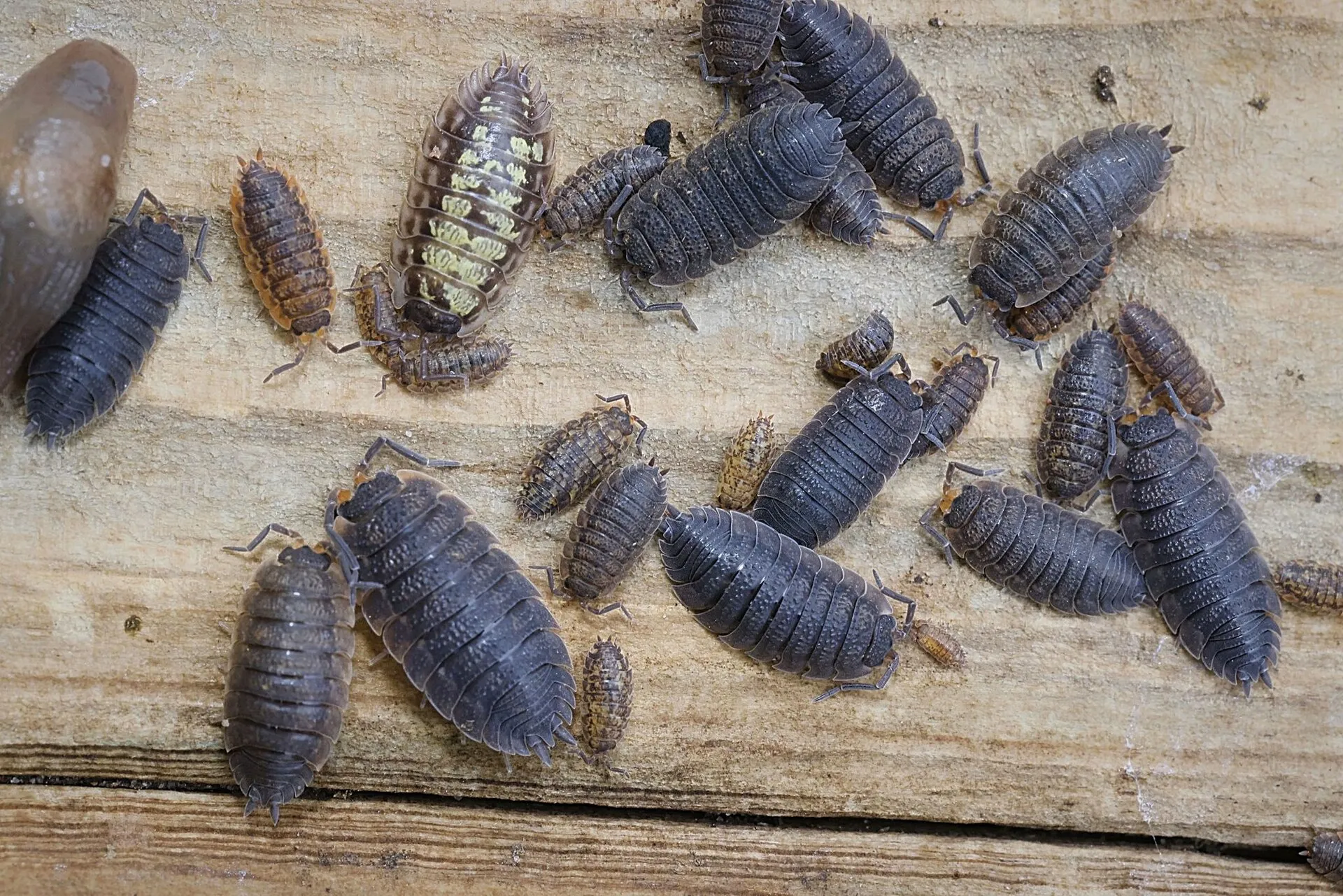
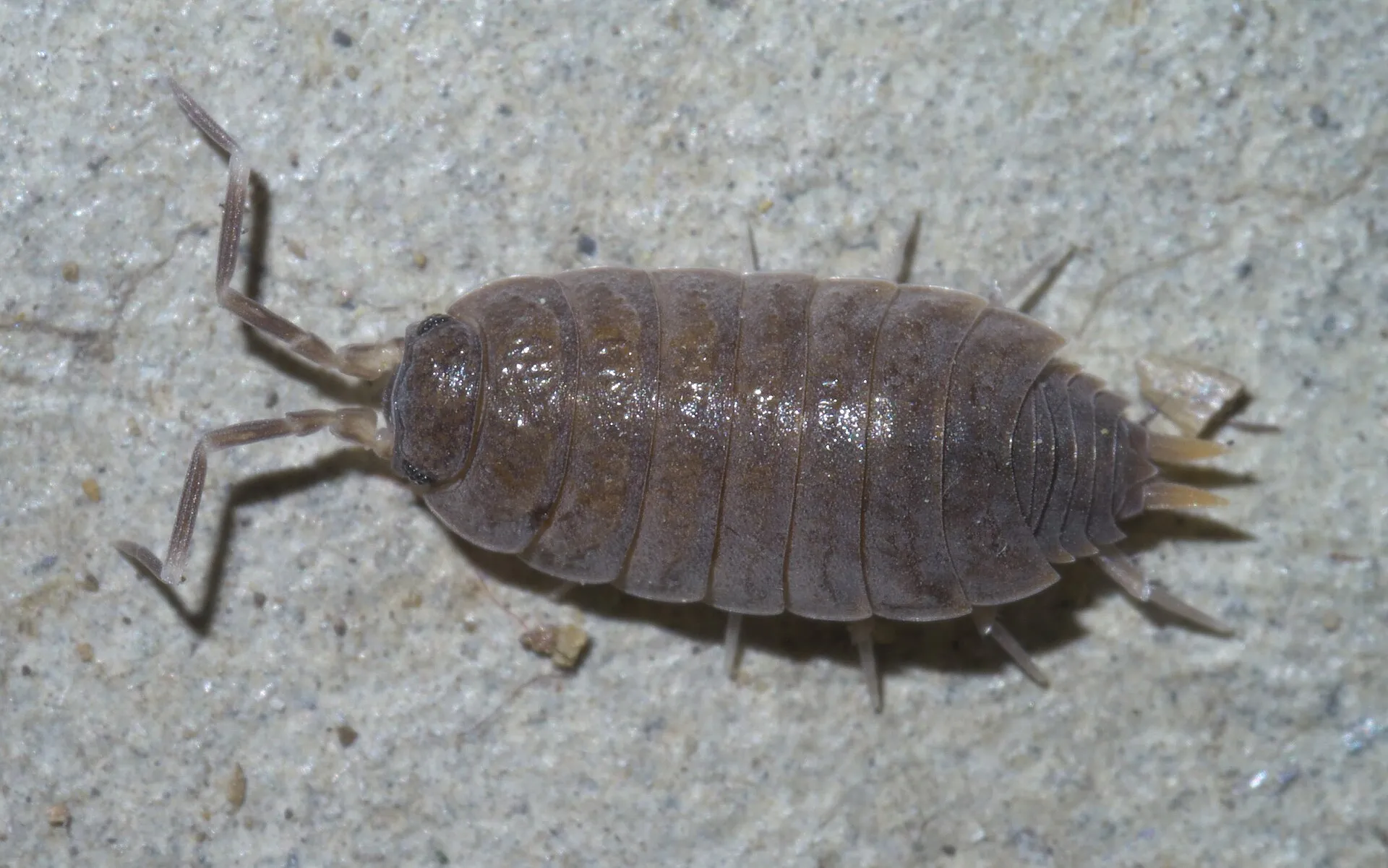
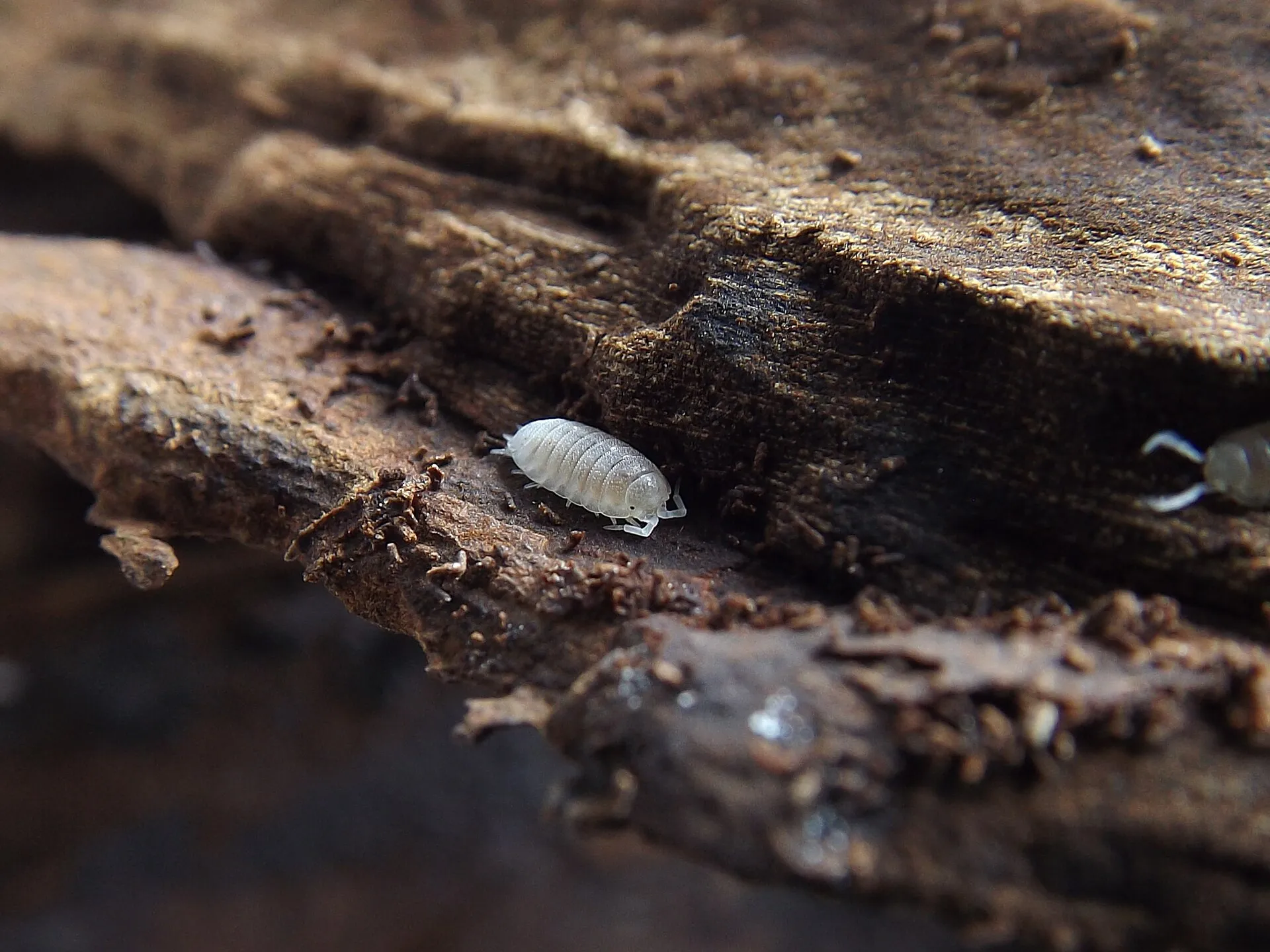
Rubber Ducky Isopod Care (Cubaris sp.)
How to care for Rubber Ducky isopods: humidity, temperature, ventilation, food and calcium, plus why colonies grow slowly and how to keep them thriving.
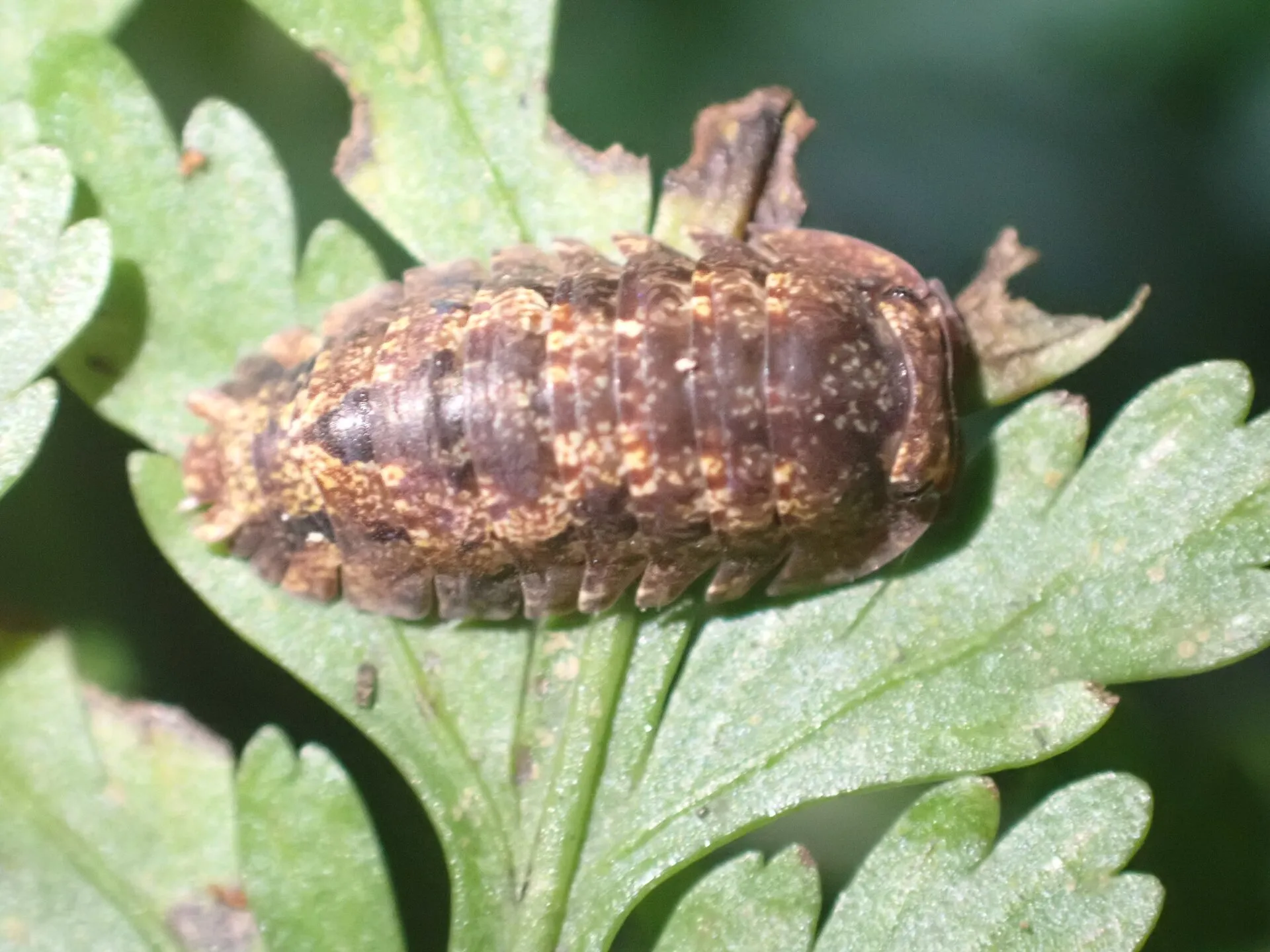 Photo: William Brockelsby, CC BY 4.0
In this guide
Short answer: Rubber Ducky isopods (Cubaris sp. “Rubber Ducky”) are a popular, more advanced species. Keep them at about 72–80 °F (22–27 °C) with high humidity (roughly 70–85%) and a moist side and a slightly drier side, give them calcium, leaf litter and protein, and be patient: colonies grow slowly. They’re a display species, not a cleanup crew for a terrarium.
Profile
| Name | Cubaris sp. “Rubber Ducky” |
| Origin | Commonly reported from caves in Thailand |
| Size | Adults commonly reported at about 1.2–1.8 cm |
| Temperature | About 72–80 °F (22–27 °C) |
| Humidity | High, about 70–85%, with a moisture gradient |
| Breeding | Slow |
| Difficulty | Intermediate |
They get their name from the “duck-like” face on the front of the head shield.
Enclosure and ventilation
- A small tub of around 6 quarts is enough for a starter colony of 10–20 individuals.
- Ventilation: keepers disagree. Some say these cave isopods prefer still, humid air; others warn that stale, wet air kills colonies. A sensible middle ground is a few small holes or a strip of fine mesh, adjusted so the substrate stays moist without going sour.
- Fine mesh on any opening: the babies are tiny and can climb.
Substrate and moisture
Use 2–3 in of organic substrate with decomposed leaves and rotting hardwood, plus a thick layer of leaf litter and cork bark. Keep one side consistently moist with sphagnum moss, and let the other side dry slightly. Our general isopod care guide explains the moisture gradient.
Food and calcium
| Food | How often |
|---|---|
| Leaf litter and rotting wood | Always available |
| Protein (fish flakes, isopod protein food) | Once or twice a week |
| Vegetables | Small pieces, occasionally |
| Calcium (cuttlebone, limestone) | Always available |
Remove fresh food after a day or two to avoid mold and grain mites.
Breeding: be patient
Rubber Duckies breed slowly compared with species like powders or dwarf whites. Reports from keepers suggest they can take many months to reach maturity, and a colony may take a long time to double.
To help them along:
- Keep temperature and humidity stable
- Provide calcium and protein
- Don’t disturb the colony often
- Start with a decent group (at least 10–12)
General tips are in how to breed isopods faster.
Are they good for a bioactive terrarium?
Usually not as a cleanup crew. They’re expensive, slow to breed and easy to lose among plants and substrate. For bioactive enclosures, use hardy, fast-breeding species. See the best isopods for beginners.
Frequently asked questions
Are Rubber Ducky isopods good for beginners?
They’re better as a second or third species. Start with a hardy species first, then try Rubber Duckies once you’re comfortable with humidity and ventilation.
How big do Rubber Ducky isopods get?
Adults are commonly reported at about 1.2–1.8 cm.
Why are Rubber Ducky isopods so expensive?
They breed slowly, and demand is high.
Why is my Rubber Ducky colony dying?
The most common causes are drying out, stale wet air without enough ventilation, and lack of calcium. See why are my isopods dying.