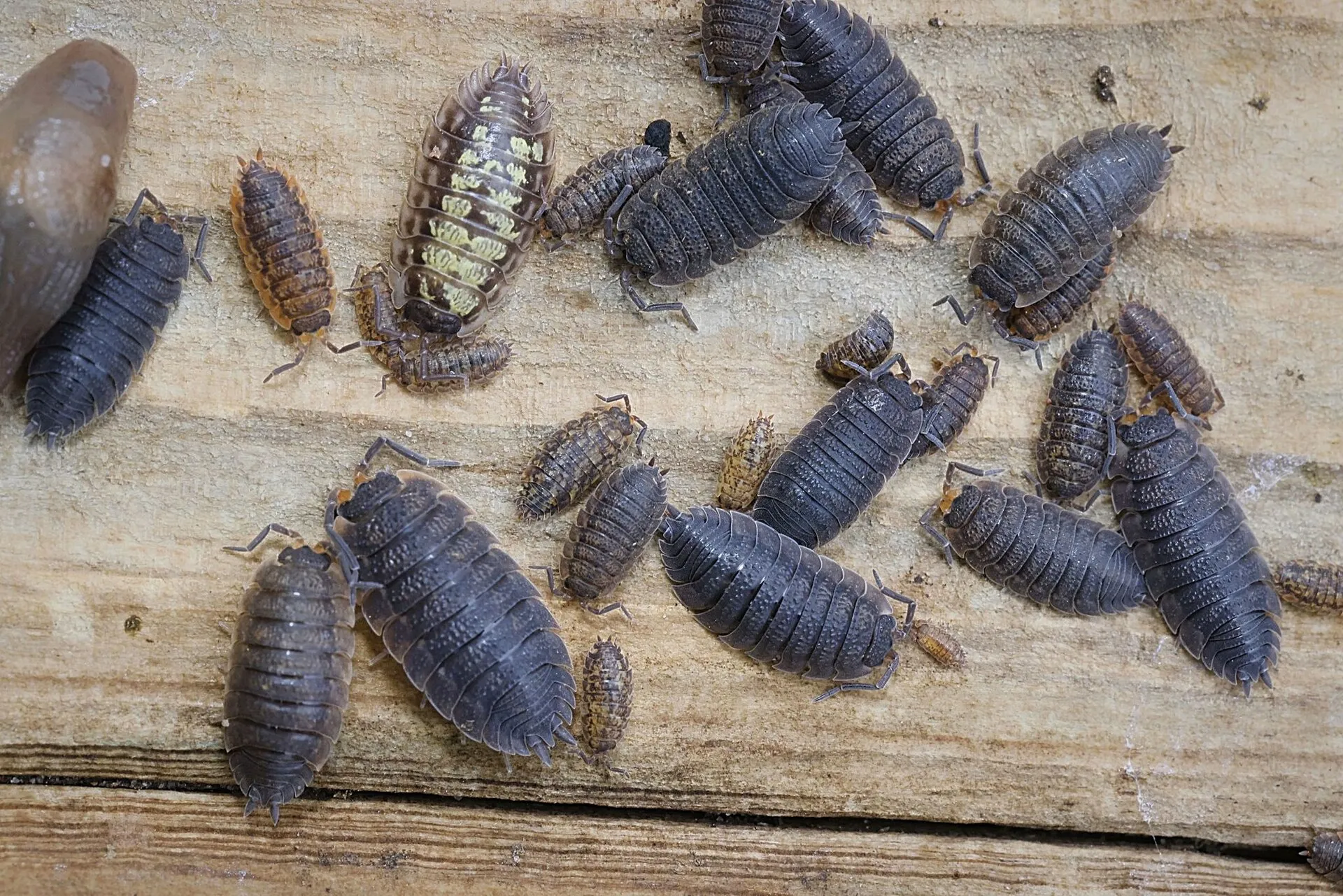
Can Isopods Climb Glass? Escape-Proofing Isopod Enclosures
Can isopods climb glass and plastic? Which species escape, why they try, and how to escape-proof an isopod bin or terrarium with lids, fine mesh and simple habits.
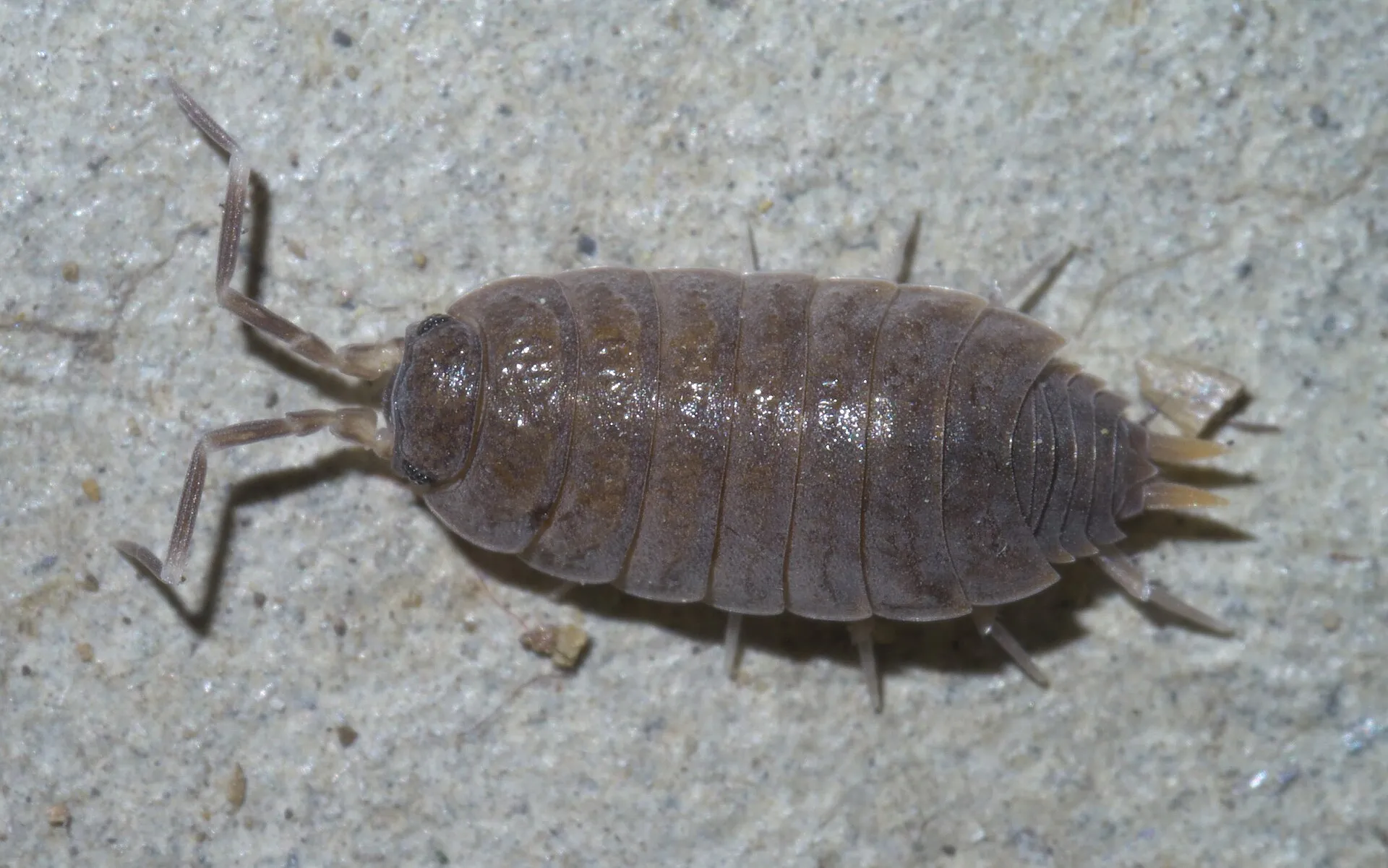 Photo: xpda, CC BY-SA 4.0
In this guide
Short answer: most pet isopods can’t climb clean, smooth glass or plastic. They escape when they get a foothold: dirty or scratched walls, silicone seams, décor or substrate reaching the lid, or gaps around the lid and vents. Some species, such as Cubaris and very small ones like dwarf whites, are better climbers than others, so a close-fitting lid with fine mesh vents is the safest choice for every culture.
Why smooth glass stops most isopods
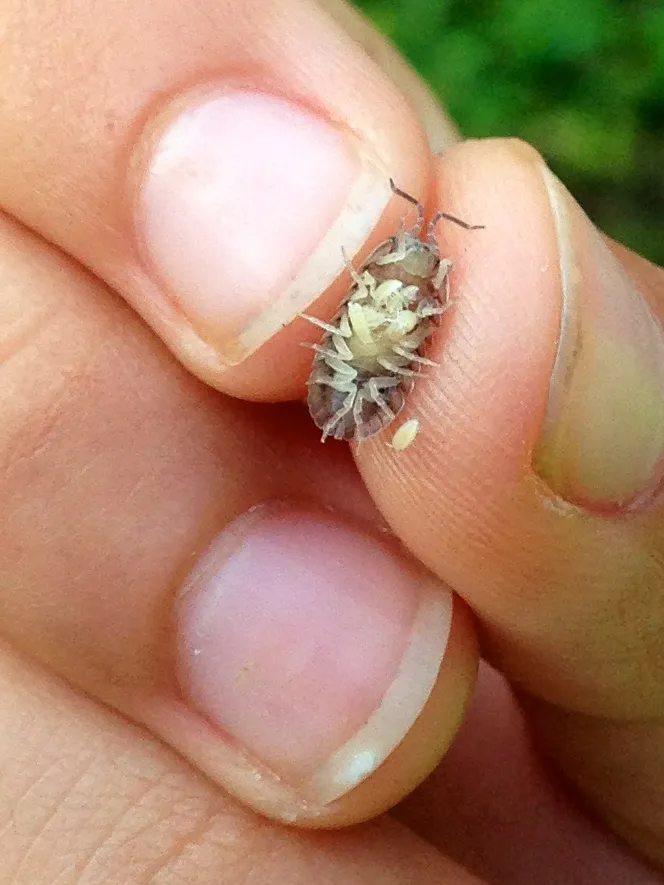
Isopods walk on legs that end in small claws. Research on climbing animals shows that claws work by hooking into tiny bumps and rough spots, and they grip poorly on hard, smooth surfaces. That matches what keepers see: on a clean glass or plastic wall, most isopods slide back down.
Things that give them a grip:
- Dried mineral deposits, dirt and biofilm on the walls. Keepers on Arachnoboards report escapes starting once a film built up on the sides.
- Scratches on older plastic tubs.
- Silicone seams in the corners of glass terrariums.
- Wood, cork bark, plants or leaves that touch or nearly touch the lid.
- Substrate piled close to the rim. Keepers suggest leaving at least about 3 in (7.5 cm) of bare wall above the substrate.
Which isopods climb best?
There’s no proper ranking, but breeders mention some species more often:
| Isopod | What sellers and keepers report |
|---|---|
| Cubaris species (e.g. rubber ducky) | Exuvium says they can climb plastic walls and push through loose lids |
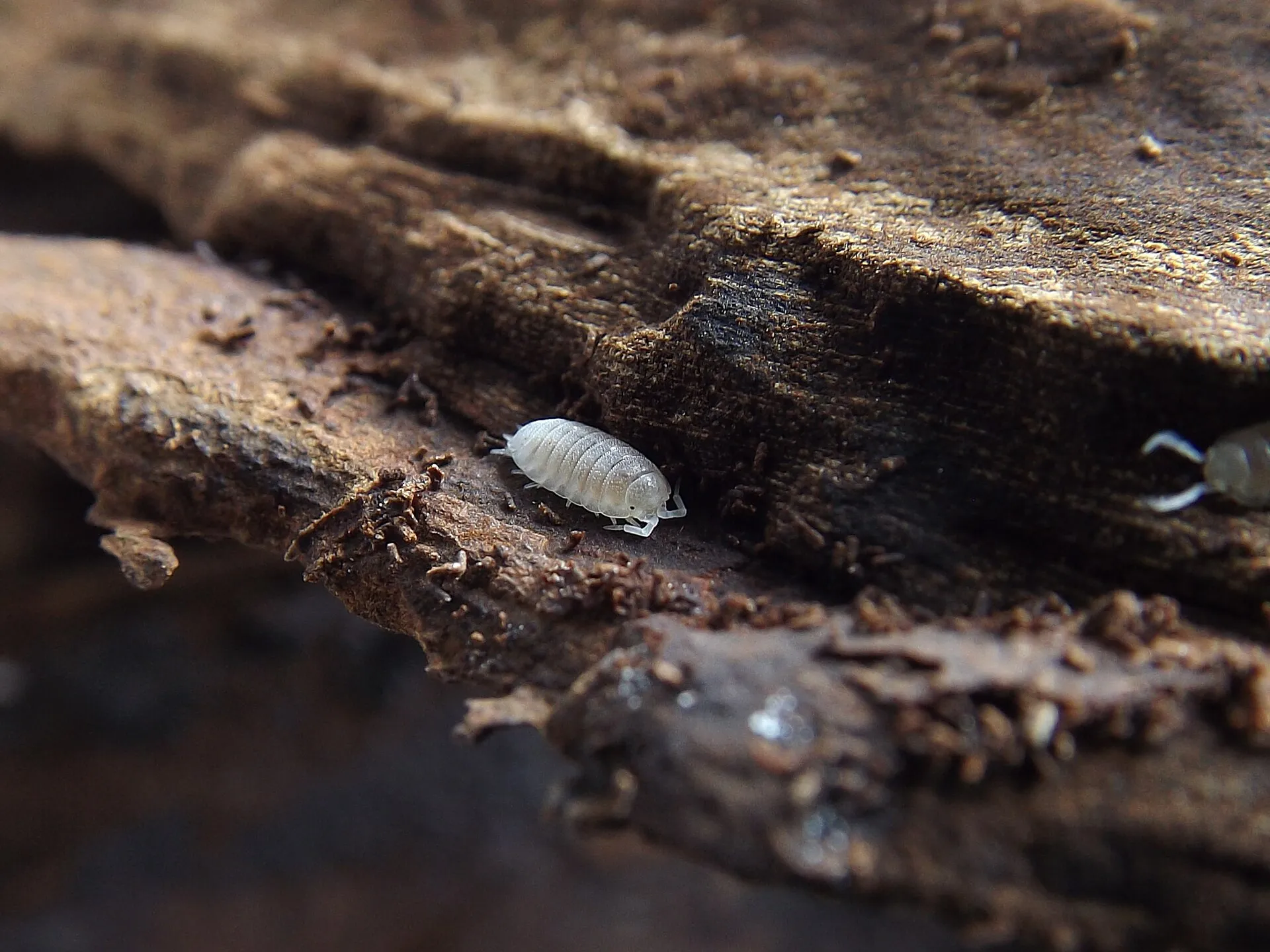
| Dwarf whites (Trichorhina tomentosa) | Called “escape artists” because they’re tiny (3–4 mm) and slip through small gaps |
| Powder blue / orange (Porcellionides pruinosus) | Fast, active and mentioned as escapees |
| Porcellio scaber and Porcellio laevis | Also listed as escapees by Exuvium |
| Juveniles of many species | Light enough to climb plastic that adults can’t |
Note that these reports mix two different things: climbing walls and squeezing through gaps. A dwarf white may never climb the wall but still get out through a ventilation hole. See rubber ducky isopod care and dwarf white isopod care for species details.
Why isopods try to escape
A few isopods wandering on the walls is normal, especially at night. Lots of isopods climbing at once can be a warning sign that something in the enclosure is wrong:
- Substrate too wet, too dry or going sour
- Ammonia from rotting food or too much frass
- Poor airflow
- Overcrowding or lack of food
Fix the conditions first; a lid only stops the symptom. Our guide to why isopods are dying covers the usual problems, and isopod care guide explains the basics.
How to escape-proof an isopod enclosure
- Use a lid that closes firmly. A snap-on tub lid or a well-fitting terrarium top. Many escapes happen while the lid is off for maintenance, so work quickly and check walls before closing.
- Cover vents with very fine mesh. Breeders sell ready-made mesh vent caps for isopod and springtail cultures. Fine mesh also keeps out fungus gnats and fruit flies.
- Leave a gap between the substrate and the rim, and keep wood, cork and plants away from the lid.
- Wipe the inside walls above the substrate now and then to remove mineral film and dirt.
- Check corners and seams. In glass terrariums, the silicone corners are the easiest route up.
- Close gaps around doors and lids. Sliding doors and mesh tops on reptile enclosures can have gaps wide enough for small isopods and springtails.
What about barriers like Fluon or petroleum jelly?
Some keepers of ants and crickets paint a slippery strip of Fluon (PTFE) or smear petroleum jelly around the top of the walls. We found no test of these on isopods. Fluon also wears off and gets dirty over time. If you try a barrier, use it only as a backup to a proper lid, keep it high up and out of reach of your animals, and follow the product’s safety instructions.
What happens if isopods escape into your house?
Usually not much. The University of Kentucky notes that pillbugs and sowbugs “find it almost impossible to survive indoors” without high moisture, and UF/IFAS describes them as harmless outdoor animals that occasionally wander inside. Damp places like basements are the exception.
Those sources are about wild pillbugs and sowbugs. Tropical pet species need even steadier humidity, so escapees will most likely dry out. That’s bad news for the escapees, but not a risk of an infestation.
Springtails escaping
Springtails are about 1/16 inch long and can jump several inches, so they easily get through vents and gaps. UC IPM notes that indoors they “soon die after entering a home unless they find moisture”. A vacuum cleaner deals with any strays. Fine mesh vent caps help here too. See how to culture springtails.
Frequently asked questions
Can isopods climb glass?
Most can’t climb clean, smooth glass. They climb when the glass is dirty or when silicone seams, décor or substrate give them a grip.
Can isopods climb plastic?
Smooth, clean plastic stops most adults, but scratched plastic, juveniles and good climbers such as Cubaris can get up it.
Do isopod enclosures need a lid?
Yes. A firm lid with fine mesh ventilation is the simplest way to keep isopods in and pests out.
Will escaped isopods infest my house?
Unlikely. Isopods need moisture, and most dry out and die in a normal home.
Sources
- Do your isopods escape without a lid? (Arachnoboards forum)
- Escape-proof enclosure for roaches, isopods and other arthropods (Exuvium)
- Trichorhina tomentosa, dwarf white isopods (Exuvium)
- Ventilation cap for isopods, springtails and fruit flies (GC Shop)
- Pillbugs and sowbugs (University of Kentucky Entomology)
- Sowbugs and pillbugs (UF/IFAS Extension)
- Springtails (UC IPM)
- Attachment of climbing animals: claws and smooth surfaces (review, PMC)